Friday, December 16, 2016

Reading to Cope and Reading to Resist


Reading to Cope
I barely slept the night of November 8th into the morning of November 9th. When I eventually got out of bed, I was exhausted, my eyes and throat hurt, and an orb of ill-feeling settled into a my stomach. I, as so many of you, spent the next few days in a stress induced haze. I put my old friend Ulysses in my satchel to carry around with me even though I only nibbled at it here and there.

Some of the great books I was reading at the time, The Lesser Bohemians and Float for example, fell by the wayside, not because something about them drove me away, but because I found myself spending more time on social media on my breaks at work and my leisure time in general; fighting on Facebook, tweeting, retweeting, reading the latest horror stories in the Post, Globe, and Times, calling congressional representatives, and signing petitions. Even though those books were there for my brain, at the time, my brain wasn't there for them.

I retreated to lighter stuff, the easier stuff, books written primarily to entertain and enchant, books that didn't want to be examined, critiqued, analyzed, just enjoyed for what they are, but I didn't want to retreat completely. Self-care is important, recharging your batteries is important, getting your brain back together is important so you can use it to the best of your abilities, but there are ways to cope and resist at the same time. So I bought books by Saladin Ahmed and Chuck Wendig because I appreciate their voices on social media, how they both take stands for what the believe in, have unique voices, and remind us, in their own ways, of important things we sometimes forget. And they had books that fit what I felt I needed.
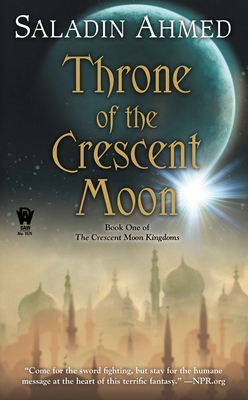
Ahmed's Throne of the Crescent Moon is an entertaining sword and sorcery story that seems to be setting the table for a very interesting exploration of political power in a fascinating world of ghuls and spells. It's hard to predict where The Crescent Moon Kingdoms series goes from here, but Ahmed has set the table to engage with everything from the tension between order and oppression, the conflict between cosmopolitan and rural societies, and the way power changes our ideals, or to just keep throwing plucky heroes and scary monsters at us. Or both.

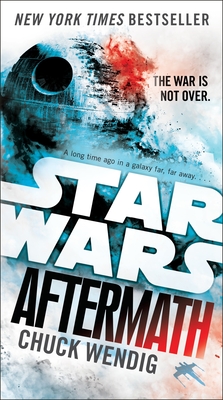
In middle school I read a bunch of books from the Star Wars universe (as I'm writing this I vividly remember a scene where Luke Skywalker uses The Force to cloud the minds of a fleet of Tie Fighter pilots and can actually feel the presence of the Dark Side within him), so of course I had to get Wendig's Aftermath. Set soon after the destruction of the second Death Star, the bulk of the book thus far (haven't finished it yet) seems to be organizing the world, introducing us to new characters and reintroducing us to old, and, in general, setting things up for the stories that get us to The Force Awakens.

For better or worse, humans are adaptable and my brain began to adapt to the persistent current of stress and disbelief that is and will be Trump's America. That orb of ill-feeling remained, but I was able to put food in my stomach around it. Though I was finally building back up to the reading pile I normally maintain (here's an example of what that looks like), I still wanted something familiar to tag along for a little while, like planting a friend at the bar while you're on a blind date.
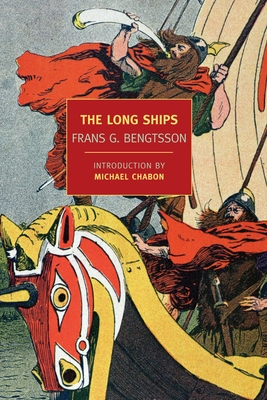
So I picked up The Long Ships by Frans G. Bengtsson. It as hard to describe how much I fucking love this book as it is to figure why I love this book so fucking much. I recommend it all the time and pretty much everyone I recommend it to eventually tells me how fucking awesome it is. I once lent my copy to my Dad, because I knew he'd love it. A few months later I asked him if I could have it back. He looked me square in the eye and said “No.” So, I just bought another copy.

Along with a couple of those comforting reads, I'm now back up to the reading pile I usually maintain. And, along with everything else, I've been thinking about what my life is going to look like for the next few years and how I'm going to meet my artistic, political, social, emotional responsibilities. What will the resistance look like in Trump's America? There are smarter people who have spent more time studying the nature of resistance who will have more concrete, more useful, more direct actions, techniques, and strategies, but, in terms of how we read, this is what I've come up with so far.

Reading to Resist
I think it's telling that, in the early aftermath of the election, the first thing so many of us on the losing side did was seek out books to help us understand the people who we had apparently ignored, misunderstood, or even insulted. We rushed to books, Hillbilly Elegy, Strangers in Their Own Land, and the Great Unraveling for example. Smart people put together reading lists to guide us. And there will be more, as publishers (like our good friend Melville House) crash books about the coming resistance into publication. Over the course of a night, it suddenly looked like we didn't understand our own country and many of us immediately sought out books to help us understand.

Books, in general, offer a particular perspective on the human experience; a long view of history, sense of interconnectedness, empathy, nuance, comfort with a level of ambiguity. They draw lines from past actions to contemporary consequences. They add depth and knowledge. There is the belief, maybe even faith, that if we just read enough about something, we'll be able to get handle on it and solve its problems or improve its conditions. On November 9th, we saw a problem and we immediately sought to educate ourselves so we could understand and solve it. But as the vote totals have been finalized, as we learn more about why people voted for Trump, and as the effect of fake news and Russian hacking begins to reveal itself, the more irrelevant the type of thinking reading engenders and supports seems to be.

Despite strong third party showings, voter suppression in Republican states, and all of the other assaults on her policy and character, Clinton won the popular vote by almost 3 million votes. By any rational way of understanding the results, Clinton won the argument. And it's not hard to see why she won the argument. Along with Trump's many disqualifying flaws, Clinton presented a cogent, coherent, and comprehensive set of policies that would have used the base established under the Obama administration to greatly improve the lives of the vast majority of Americans while grappling with climate change (you know, civilization's most urgent threat). As we have floundered around to explain what happened, especially in the early days after the election, the Clinton campaign was accused of a lot of things, most specifically neglecting the white working class (whoever they are), but if you look back, she did nearly everything pundits accused her of not doing; talking about jobs, offering solutions to the lack of American manufacturing, having a plan to transition coal mining communities to a new economy, closing the education gap, reducing the cost burden of childcare, etc. In short, the lives of the white working class (whoever they are) would have greatly improved (perhaps as much as any time since the post war boom) if Clinton's policies were enacted. The only thing she didn't give them was the opportunity to whine about people of color. The only reason she's not President is a few narrow defeats in key states.

The value of bookish thinking continues to diminish the more we learn about Trump voters. Not only are we talking about overt white supremacists, but we now know, thanks to a whole range of forces, that many of his voters live in an entirely different world of accepted fact than I do. Furthermore, we now know that there was a percentage of Trump voters who simply refused to believe that he would do the things he promised to do that would HURT THEM. This isn't the usual cognitive dissidence, this is a powerful selective reasoning, a kind of racist optimism that lets people assume Trump would do all those horrible things to people of color but none of the things he promised to white people. They reasoned that, even as he promised to repeal Obamacare and even though House Republicans have voted about 50 times to repeal Obamacare, it helps too many of them to be dismantled. To me, that is a decision making system that has already rejected the system that reading supports. To put this another way; Clinton's failure to convince some voters had nothing to do with argument.

The root of the rejection is deep and complicated, going back thousands of years of religious dogma and tribalism right up through McCarthyism, the Southern Strategy, and the myth of liberal bias in media. In other post or essay or ramble, I might spend a few thousand works exploring the differences between “dogmatic” and “ideological” thinking and how those differences play out in contemporary politics, but I'm thinking about the books we can read right now.

Maybe after a little more time to think and read I'll come up with a better answer, but, right now, it seems the best way to read to resist is to support writers who resist. If you support the stance Celeste Ng takes on social media, her opinions, her #smallacts, you should buy and read her book. If you've already got a copy, you should buy another one and give it to a friend or donate it to a little free library. If you can't afford to buy a copy, you can make sure it's in circulation at your local library. Then, whenever you favorite or retweet a tweet of hers (whether something political or a story about her charming and curious kid) just remember at some point that day, to share a link to her book on your social media (here's a good one to share) and urge your friends and followers to buy it. Part of the challenge of resistance is securing the resources to resist, finding ways to risk losing your job, risk being arrested, risk having your stuff vandalized, risk being physically hurt, and, in our capitalist economy, money is a resource that mitigates all risks.

I have no idea what the resistance is going to look like. I'm not sure even those who understand resistance much more than I do know what it's going to look like. But right now, we can support the fighters and we should. This is how you feed the resistance. And it's really a win-win, because you also end up with another book.


(PS. It occurs to me this post could be read as very self-serving in that I've written a book, I think it's swell when people buy it, and I consider myself resisting. Though I suppose you don't have a compelling reason to believe me, I will tell you that is not what intended for this post and I only realized that interpretation was possible after I'd edited it a few times. But, reading is powerful because of the freedom of interpretation, so I can't stop you from reading this as a writer surreptitiously begging people to buy his book. I can only ask that you don't punish the other authors who I've mentioned in this post. If you were thinking of supporting them before it occurred to you that I might be being selfish with this post, please continue to support them.)

Tuesday, December 6, 2016

About 70,000 White Supremacists

With the difference between Trump and Clinton in the three key states in this election down to around 70,000 votes (and still shrinking, though this could change again with recounts), I think we need to grapple with the fact that our initial knee-jerk explanations for Clinton's electoral loss were all wrong. As that number shrinks, and as Clinton's popular vote lead continues to grow (at 2.7 million as of this writing), it becomes clear that so much of the hand-wringing over identity politics and Democrat outreach to the white working class (whoever that is), might be dangerously misguided. There might be a simpler, but, in some ways, more distressing reason for Clinton's electoral college loss.

I'm drawing my conclusion from two primary facts: Trump outperformed Mitt Romney with white voters and all the polling indicated the Clinton would win. Combined with the enthusiasm of the KKK for the Trump campaign, the role of Steve Bannon in his campaign, and the spike in hate crimes after election, these facts points to one potential conclusion: About 70,000 white supremacists in Wisconsin, Michigan, and Pennsylvania who had not voted in recent elections and/or came from demographics that do not regularly vote (and thus were unlikely to be polled) turned out for Trump.

That's it. In our electoral college system, 70,000 votes (or even less) in the right states will overpower millions of votes elsewhere. It had nothing to do with Clinton's messaging on economic issues, and probably nothing to do with how much time she spent in various states, and probably nothing to do with the Democrats focus on voter registration rather than turning out registered Democrats. It was simply that a population that had previously dropped out of the political process and who happened to live in the right places turned out to vote. A population that is, in many ways, beyond influence.

This is not to say that Clinton ran a perfect campaign or that Comey had no influence on the election, or that the media's creation of a false equivalency didn't have an impact, but, that the population all of those things had the greatest impact on was not the white working class (whoever they are) or third party voters, or Democrats who might not have been energized by Clinton who didn't vote, but on a population that I haven't seen much discussion of yet: moderate Republicans.

Trump did win the Republican primary, but along the way, more Republicans voted against him than for him. (He has yet to win the majority of votes in any of the contests he's run in.) In a crowded and weak field, Trump was able to win because he had a simple message that spoke to the base, he was already famous, he got tons of free publicity from the media, and, he energized a population that probably wasn't doing a lot of primary voting before. In short, in the relatively low turnout primaries, against the likes of Jeb Bush and Marco Rubio, and, likely with the help of an awakening white supremacist movement, Trump still was not able to convince the majority of Republicans to vote for him.

And yet, when November came around, despite many prominent Republican leaders opposing him throughout the entire primary process, despite most Republicans voting against him in the primaries, and despite a series of actions and scandals that would have ended the campaigns of any other candidate at any other time, moderate Republicans decided the little R next to his name was more important than anything else. I suspect that the thirty-year smear campaign against Hilary Clinton and the false equivalency perpetuated by the media, and the balance of coverage about Clinton focusing on her email non-issues rather than on her policy ideas and qualifications, had their biggest effect not on third party voters, not on Democrats who stayed home from the polls, and not on voters who switched from Obama to Trump, though they were all impacted as well, but on moderate Republicans who did not switch their votes enough to counteract the surge in new white supremacist voters. Perhaps I've missed it in my media stream, but it seems like all of the Republican hold-your-nose Trump voters have gotten a pass. There are Republicans who should have known better and who bear as much responsibility for Trump's election as those who didn't vote at all.

For Democrats, this interpretation poses a huge problem. You can change a message, you can change outreach focus, you can change voter turnout goals, you can change which voters you are most trying to turn out, but you can't and shouldn't really try to court the votes of white supremacists. At best, you should simply have a political system in which white supremacist beliefs are unacceptable and they drop out of the process as had likely been the case, and at worst you always have enough non-white supremacists voting in all parties and in all elections to overcome any white supremacist voting block. But with the electoral college system, 70,000 unexpected votes or less, in the right places, can overcome millions of votes everywhere else.

The real goal then, for Democrats, or really, for everyone who doesn't want a system that can be swayed by well-placed fringe populations is election reform and despite that being the obvious solution to a Trump election (at least as the data stands now) it's not very politically attractive. And it calls for either a constitutional amendment or for a significant number of states to change how they allocate their electoral college votes (though, that's not actually binding.) and, given that Republicans can only win the Presidency for the foreseeable future if millions of voters in California can be nullified by thousands of voters in the Midwest, it is highly unlikely this will happen. Or, to put this another way, Republicans only stay in power because our electoral systems (sometimes in good ways but mostly in bad ways) dis-empower voters in urban centers.

The problem, of course, came because, in our rush to declare a winner, to have a headline, to fill in the map, we drew conclusions before all of the information was in. If the results were kept secret until all the votes were counted, the narrative of this election would have been a lot different. Instead of Clinton abandoning the white working class (whoever they are) or the “economic anxiety” of the rust belt (despite most people in exit polls believing Clinton superior on the economy), or the failure of “identity politics,” we would have always been talking about what this election actually is: a fluke of our outdated system. One that could be easily corrected—given Trump's obviously lack of qualifications for the job—with another feature of our outdated system. The real danger here, is that, too often, the first narrative sticks whether it is true or not (especially when it is advantageous for someone) and Democrats seem willing to act and react as though they were soundly defeated in this election.

In the near future, this tells me one thing about how Democrats should interact with the Trump administration. Given that Clinton won the popular vote, given that the electoral college results hinged on such a slim plurality, and given how Trump has conducted himself, before and after the election, Democrats should give him, his administration, and his policies as much respect as Republicans gave to President Obama. None. Fight every single one of his appointees from the cabinet on down. Use every procedural trick to delay, block, degrade, and prevent every policy the Republicans offer, even the ones that seem reasonable. Filibuster everything. Abuse it the way Republicans abused it. I mean, they hobbled the Supreme Court on purpose. There may not be a good lesson on how to win future elections to come out of this, but it is clear the Democrats need to fight as if they are saving America from a kleptocrat who sneaked into power on an obsolete technicality, because that is what happened.

Wednesday, November 16, 2016

Why the Electors Should Elect Hillary Clinton

The electoral college is a strange institution. It is a nod to populism and democracy restrained by a heavy dose of elitism. It was created, in part, because the Founders were not sure the people were capable of electing a President, and, also, because this is America, another way for slave-holding states to protect their institution. It should be abolished. However, for most of its history, the electoral college vote and the popular vote lined up anyway and so it fell to the “if it ain't broke,” priority level. But now, two of the last three Presidents have been elected to their first term after losing the electoral vote. And given how the demographics in this country are changing, I suspect the odds of the popular President losing will continue to increase. The best solution is, of course, a Constitutional amendment abolishing the electoral college and instituting a simple popular vote (or perhaps even a hybrid system where the College is used to break a statistical tie), but the second best solution is for electors to informally commit to cast their votes for whichever candidate won the popular vote. And there is no pair of candidates more deserving of informal solution than Hillary Clinton and Donald Trump. Here's why. (And the way things are going, this list will be incomplete the day or so after I publish it.)

Clinton Won the Popular Vote By a Substantial Margin
As of this writing, experts are estimating that Clinton is likely to have received 2 million more votes than Donald Trump. There is a chance that margin of victory could be much higher. This is not within a margin of error. That is not a small enough number to claim they are essentially tied and use the geographic distribution of electoral college votes as the tie breaker. That is a clear win.

Honestly, even with everything else I am going to argue specifically about Trump, if this were not the case, if he had won the popular vote or if that difference had been less than or around the difference between Bush and Gore in 2000, none of that would matter. Living in a representative democracy means accepting the representatives that are elected. If a majority of Americans voted for him, there would be no justifiable reason for electors to even consider breaking with precedent. But most Americans voted for Hillary Clinton and Donald Trump is an unprecedented candidate.

Trump's Ties to Russia
It is somewhat ironic, that buried within all the terrible justifications for the electoral college is a decent one that is suddenly relevant. The primary reason for the “natural-born citizen” clause in the Constitution is to protect the United States from a President who is under the influence of a foreign power. In short, the electors are bound by the Constitution to protect the country from a President with compromising foreign ties. Suspicion of compromising ties to Russia and the Putin regime have plagued the Trump campaign, along with evidence of Russian meddling in our election in his favor. A Russian diplomat claimed that Russia had long been in contact with the Trump campaign. Trump also, HAS ALREADY TALKED TO VLADIMIR PUTIN. BEFORE HE TALKED TO THE PENTAGON. We still only have strong suspicions, but we have at least as much of it for Trump's alleged ties to Russia as we did for Clinton's alleged misconduct as Secretary of State.

That there is a reasonable suspicion and that he TALKED TO PUTIN BEFORE THE PENTAGON and we have an alternative that won the popular vote makes this decision much less fraught.

Unprecedented Conflicts of Interest
Rather than putting his business affairs in a true blind trust, he has simply turned over their management to three of his children, which does not constitute the blind trust that would undo the risk of conflicts of interest. To make matters worse, those same three children will be on his transition team. This is a clear conflict of interest and one that cannot be tolerated. He has now also asked that his son-in-law be given security clearance, a person with no apparent role in the administration who also happens to own media. And already Ivanka has come under fire for potentially using the platform of the presidency to hawk her jewelry line. Perhaps what is most alarming about the overtness of these violations of protocol is that it is clear either no one in the Trump family or transition team actually understands what the concept of conflict of interest is or doesn't care. This, at the very least, suggests that Trump is, at the very least, comfortable with, at the very least, appearing like he is using the Presidency for personal enrichment. Or, to put this another, Republicans would lose their goddamn minds if Hillary Clinton included Chelsea in her transition team.

Furthermore, because he did not release his full tax returns, we do not know what other potential conflicts of interest he might have. Does he have relationships with foreign banks? Does he have investments in industries that stand to gain from certain policies? Does he hold compromising debts? Has he evaded taxes in potentially actionable ways? In short, we already see one very direct, very avoidable, disqualifying conflict of interest and have reason to suspect there may be many more.

Steve Bannon
According to Steve Bannon's own words and other white supremacists, Steve Bannon is a white supremacist. The fact that Trump has named him chief strategist and given him such a level of power in shaping the executive branch of the United States of America, tells me that Donald Trump is unfit to be the President of the United States, if for no other reason that it is an extremely stupid, stupid thing to do. If Trump wanted a smooth transition, even for nefarious purposes, if Trump wanted to quiet some of the protest surrounding his election, even for nefarious purposes, if Trump wanted to make it difficult for Democrats to oppose the Republican agenda, even for nefarious purposes, giving Bannon a high profile position is a terrible tactic as it validates all of the accusations leveled against him. Along with all the reasons why such a terrible person should not have that much power in our society, it displays a shocking lack of judgment by Donald Trump. (Sidenote: Bannon is only third because in terms of the roll of the electoral college, the first two points, I think, are directly relevant to their Constitutional responsibilities.)

He Has Empowered White Supremacy
Emboldened by Trump's election, there has been a spike in hate crimes around the country. As of this writing, no one has died. There are moments when I am grateful and there are moments when I am terrified that I am grateful that no one has died. Significant aspects of his platform are overtly unconstitutional and, along with damaging the lives of American citizens and other human beings, will clog our court systems with constant legal battles. And he was endorsed by the KKK and is bringing known racists (see above) into the White House. We don't want a President endorsed by the KKK and we don't need to have one.

Ongoing Legal Issues
Trump also faces an ongoing lawsuit against Trump University, one that could potentially result in criminal charges. He has also been accused by multiple women of sexual assault. He and his businesses have also had a long history of refusing to pay contractors and others who have performed services for them and daring them to take him to court. Perhaps his election will discourage those who might have brought suit against him. Perhaps that is an even better reason not to make him president.

His Transition Has Been a Disaster
His transition team has had one major shake-up, he is not prepared to higher the requisite staff, he needs extra coaching from Obama to be prepared, his proposed cabinet (all the versions of his proposed cabinet) are just the people who were nicest to him over the course of his campaign, in absence of other preparation he's hired the same lobbyists, cronies, and corporate stooges he promised to “drain” from Washington, and his communication with the various parts of the executive branch have been spotty at best.

He has had months to prepare. He has had since July, to do the work of creating an administration. Given that he does not have any previous government experience, I think we can forgive something of a learning curve. That said, he is now going to be the most powerful person on the planet. If he does a poor job of preparing to govern, when he has only one (albeit complicated) issue to prepare for, how good of a job actually governing can we expect him to do?

He Doesn't Want to Be President
As has been abundantly clear by his desire to only spend part of his time at the White House and the look on his face during his meetings with President Obama, Trump had no idea the scale of the responsibility of the presidency and has no particular desire to rise to the scale. He wants to give speeches. He wants to have the triumph of winning the election. He wants his ego validated. He does not want to govern. He can have everything that he wants and Clinton can still be President.

Arguments Against
There are, of course, reasons one might decide honoring one particular aspect of the electoral college is more important than preventing the certain damage a Trump presidency will do to the world. As with all arguments, some are more valid than others. Here are a few that I anticipate along with my counter arguments.

Small States
Just look at all that red on the map. The electoral college ensures that smaller, less populated states don't have their views trammeled by the urban majority. We should respect that right.

Small states already have the Senate. They essentially have the House too. In fact, in every governing body where representation is distributed geographically, smaller communities have more power than larger communities. There should be safe guards that ensure the interests of those who don't live in major metropolitan areas are respected, but those safe guards already exist. (I mean, one of the major reasons Massachusetts doesn't fund the MBTA at the level it needs is the geographic distribution of legislative power enhances the influence of Western Massachusetts who somehow doesn't get that I don't really drive on their roads that my taxes pay for in the same way they don't really ride the T.)

And about that red map. It certainly looks impressive, but, there are fewer people in the red than there are in the blue. I've had discussions around this issue before, and there really isn't a way to get around the fact that arguing for the electoral college argues that people in cities deserve less representation than people in towns. Even if you don't intend for that to be the case, when representation is allocated geographically, that is the case. There are a lot of different ways to handle this (parliamentary-style proportional representation rather than winner-take-all elections has some appeal) but in the short term, respecting the interests of the greater number of voting American citizens requires electors voting for Clinton.

Won't There Be Unrest
Before they won the electoral college, Trump and his surrogates were crowing about how the election would be “rigged” and how they would not respect the results if Clinton won. Some, including people who have held office, advocated for protest and (I'm being very generous here) hinted at armed resurrection. If they were posturing that way before the election, even though if you accept the electoral college as valid you have to accept elector freedom as valid, imagine the kind of violence they would be capable of if pledged electors flipped their votes.

First, there already is unrest. Unless, of course, you don't consider a wave of hate crimes unrest.

Second, I thought we weren't supposed to negotiate with terrorists. If Trump and his supporters are willing to resort to violence to install him in the Presidency that is all the more reason he shouldn't have it.

What if a Republican Wins the Popular Vote But Not the Electoral College
Then that candidate should be President. As I said earlier, this movement to influence electors doesn't really happen if Trump won the popular vote.

We Should Respect the State by State Results
Whether or not this is a legitimate way of electing the President (see above about the representation of small states in government), Republican governments in numerous states, including important swing states like Florida, North Carolina, Arizona, and Wisconsin actively suppressed the vote in specific populations in order to increase their chances of winning. Voter fraud is, essentially, non-existent, and yet, waving this boogey-man around after the gutting of the Voting Rights Act by the Supreme Court, Republican state governments imposed onerous registration requirements and reduced access to the ballot in ways that specifically targeted African-American and other likely Democratic voters. Therefore, there is good reason to question the validity of the results in all states that imposed voting restrictions after the Voting Rights Act was voided.


It Wasn't a Popular Vote Election/Any Other Technical Reason to Question the Popular Vote
I have seen some fairly logical, fairly reasonable arguments why the fact of the popular vote win in this case does not really mean that Hillary Clinton won the popular vote. I'm as big a fan of logical and reasonableness as the next guy and logic and reason tell me that we need to do everything we can to prevent a Trump Presidency. I think the numbers also would have been different if say, it mattered at all that he lied more than the told the truth, or if a false equivalency hadn't been created between the two of the major candidates, or if he hadn't been giving millions or even billions of dollars in free publicity by CNN et al., or if Republicans hadn't been smearing Clinton for thirty years for having the audacity to try to be a woman in power, or if moderate Republican voters actually voted the moderate choice, or any of the other myriad of woulda, coulda, shouldas between us and the Trump presidency.


Go ahead, call me a sore loser. But I would have some serious questions about someone who could lose graciously to the KKK.

Thursday, November 10, 2016

An Open Letter to Senators Elizabeth Warren and Ed Markey

Now the work begins. I am still figuring out what I am going to do, where I am going to send my money how I am going to help. I think it's clear the primary policy goal is to flip the House (and maybe the Senate, though that might be even more of a long shot) in 2018, the way Republicans flipped it in 2010. I think between then and now, we need to find ways to prevent and ameliorate the damage a Republican administration (let alone a Trump administration) will do to this country, especially this country's most powerless and vulnerable citizens. I'm a writer so my first impulse is to write stuff. Below is a letter I sent to both of my Senators. I should note that, though I don't remember where I saw this first, I definitely saw this idea expressed by other people. If you like what I have to say and/or the way I say it, you are free to use this words in part or in total. Boats against the current, y'all and don't let the bastards grind you down.

Dear Senator Elizabeth Warren & Senator Ed Markey,

In 2008, Barack Obama won the popular vote and the electoral college. The Democrats won the House and won a super-majority in the Senate. I don't know if popular mandates really exist, but 2008 was awfully close to one. And how did congressional Republicans respond to the direct endorsement of the 2008 Democratic platform: by vowing to make President Obama a one-term president.

To do so they abused every procedural loophole, broke decades old agreements, and ignored long-standing decorum. They obstructed bipartisan legislation with anonymous holds. They refused to confirm Federal appointments. They filibustered virtually every single piece of legislation that was put forth.

Furthermore, there is ample evidence that they never once negotiated in good faith. They never intended to support anything President Obama proposed even when it was essentially a Republican policy. Even when their ideas were incorporated into legislation through compromise and consensus, as the federally administered public option was removed from the Affordable Care Act, they still refused to support the legislation. They asked for everything and even when they got it, they still said “no.” Their only goal was to deny the first African-American President anything resembling a policy victory and if that meant hobbling the efforts to recover after the worst recession since The Great Depression and stoking the fires of racist resentment, so be it.

I am not asking you to shout at President Trump during his State of the Union address. Even though more Americans voted for Hillary Clinton I am not asking you to question the legal validity of his presidency. I am not asking you to question his citizenship, to spread rumors about his faith, to accuse him of crimes he did not and could not have committed, or to attribute problems to him he could in no way have prevented. I'm not asking you to stoop to their level of insulting the American people by refusing to outwardly respect their President.

But I am asking you to block everything. Filibuster everything. Put an anonymous hold on everything. You were rewarded for your decency and your commitment to longstanding procedures with the Tea Party, a vacant Supreme Court seat, government shutdowns, a game of chicken with the debt ceiling, and Donald Trump, a man who began his political career by questioning Barak Obama's citizenship. Given how the districts were gerrymandered in 2010, given how they treated you when you were in power, given that more Americans voted for Democrats in the House in 2014, and given that Hillary Clinton received more votes for President than Donald Trump, they have not earned your consent or cooperation. They have not earned the right to discriminate. They have not earned the right to discard science. They have not earned the right to threaten a woman's right to choose. They have not earned the right to risk the health and well-being of our people. They have not earned the right to govern as if they speak for all Americans. They have not earned the respect they refused to show to you.

If the Trump administration magically starts proposing productive thoughtful policies with meaningful common ground, then negotiate for the best version of those policies possible, but make no compromises for the sake of compromise. Do not reach across the aisle to create the optics of bipartisanship. You've tried that already and they spit in your hand.

To be the adult in this room, you need to fight like hell.

We know exactly what they plan to do and we know the terrible consequences if their platform is adopted. I know you will not be able to stop everything, but you are our dam against the flood of dangerous policies and we need you to hold strong for at least two years.

I promise, that if you do, the voters of America will do better in 2018.

Thank you for your time.

Signed,


Josh Cook

Monday, October 24, 2016

Piggy Banks at Parnassus, Largehearted Boy, Apt and What Social Security for Everyone Would Mean for Books

A bookseller at Parnassus Books, Ann Patchett's bookstore in Nashville, was faced with medical bills she was unable to pay on her own. In response, the store organized a fundraiser to help her and other booksellers around the country facing financial crises. They got a number of authors, including some very famous authors, to decorate piggy banks and then auctioned them off. It was a testament to the generosity and creativity of people in the book world. Soon after that, David Gutowski of largehearted boy  was faced with a sudden medical emergency and had to set up a gofundme  campaign in order to cover the costs. The goal for the campaign was $20,000 and when I last checked, more than double that had been raised. Once again, a community without a lot of spare capital came together to support one of their own. Even more recently, apt literary magazine and Aforementioned productions, a small nonprofit press and event organization, found itself in tenuous financial circumstances after the founders, who had been sustaining the venture from their own pockets, got into a car accident. They publish a great literary magazine and great books and they put on fantastic events. I have no doubt that, once again, the literary community will come together to make sure the important work of culture continues.

The usual framing of stories like these focuses on the generosity, the community, the happy ending. And that's great and all. We should celebrate generosity. We should celebrate community. We should celebrate the happy ending. But we should also ask why these people needed community generosity in the first place.

Largehearted boy isn't just some blog on the internet, it is one of the longest running, most influential, and most important lit and music blogs out there. And yet for all the readers, for all the influence, all the followers, all the interviews, all the partnerships and playlists, David did not have the financial security to weather a medical emergency. We have to wonder whether there would be a largehearted boy at all if something like this befell David five or ten years ago. And then we have to wonder how many largehearted boys, Aforementioned productions, and Parnassus bookstores we don't have because of a cancer diagnosis, a broken down car, or a lost day job.

To me, this is all part of the same problem, the same flaw in our economic system that creates poorly paid nurses, writers who can't make a living on their writing, teachers' aids who need second jobs, adjunct professors living on welfare, parents working a third job to cover the cost of childcare that allows them to go to their first two, and nearly all of the other material precariousness in our society. There are lots of different ways to solve this precariousness, but, I believe, the simplest, most efficient, and most effective way is a federally administrated guaranteed minimum income or Social Security for everybody. Sure, there would still be problems, still be poverty, still be material insecurity, but there would be far less of all three and all three would be more easier to deal with. In the book world alone, the impact would be tremendous.

Wonky Warning: This piece is going to go on for a bit, so if you don't want to sit through all of it here's an executive summary. Our system only rewards industries that focus on profits and so the vast majority of capital has been sucked to those industries. Direct redistribution is the easiest way to correct that imbalance. A guaranteed income of $30K or more a year would give a financial flexibility to the book industry that would allow people to make a decent living while keeping the final price point for books relatively low. Ultimately, the only real argument against Social Security for Everybody is the idea that some people deserve to be poor. I guess you can believe that, but you sure as fuck better not call yourself Christian while you do.

If you think about it, the fundamental idea of capitalism is kind of...odd. Basically, the free flow of capital in service to the drive for increased profits through unfettered markets will result, through competition and consumer choice, in high quality goods at fair prices and a more prosperous society. The odd thing is that what should be the goal, a more prosperous society, is actually the byproduct. Essentially, people striving for profit will inherently make a prosperous society. Seems like a pretty tenuous assumption is you ask me. And it creates a pretty significant inherent flaw: there is no way to stop destructive, dangerous, and destabilizing actions if they produce short term profits.

Of course, there has been some prosperity, some ingenuity, some advancement from previous societies, (I mean, even Marx believed capitalism was necessary) but that flaw compromises everything. It has lots of different consequences from oil companies not using their vast wealth and research infrastructures to pioneer renewable resources, to the fact that currency speculation is a thing, to companies driving around aluminum to inflate its price, to lack of paid parental leave, etc, but the one I'm focusing on now, is that those who make the most money in our system are those who either; position themselves close to money, spread the cost of their profit around so that people don't feel like they are paying them, shift some significant portion of their overhead onto some other entity, and/or have or control a resource that people need to pay for. As you'll notice, there aren't many of any of those in the book world.

So, some quick examples to explain all four. First, someone working in finance is already working with money, so it is easy to find ways (legally and ethically, legally and unethically, and illegally but uncaught) to generate profit. That's why there are plenty of mediocre or even bad investment bankers, financial planners, hedge fund managers, etc who make a shit ton more money than, say, the world's greatest nurse or the teacher's aid who lays the groundwork for people with autism to lead fulfilling adult lives. Second, Oprah is very profitable, primarily because you give her money. Of course, it doesn't feel like you do, because you give your money first to a company that advertises on her show, network, in her magazine or whatever. You could say the same for those people and organizations that find ways to diminish your awareness of payment through convenience (automatic payments a la Netflix,) or bait-and-switch style fees added on to sticker price. Third, by paying its workers so poorly, Walmart has essentially shifted a major portion of its overhead (the part that keeps its employees, you know, alive) onto federal and state relief programs. Amazon does something similar by using their size in the market to force margin cuts onto vendors and squeeze tax breaks out of cities. Of course, there are people and businesses that engage quite ethically in all three of these methods of profit maximization, but, the important fact is there is no mechanism inherent within capitalism to prevent someone like Martin Skirelli from being a total fucking asshole. If it's profitable, it's unstoppable. I don't think the fourth strategy really needs an example, but I'll just say that it can be really easy to make money if you own buildings or the patents to lifesaving drugs.

There are lots of ways to fix, or at least mitigate the consequences of, this inherent flaw and we've actually tried a lot of them with a fair amount of success; collective bargaining through trade unions, regulations on the financial market, overtime pay, meaningful minimum wage, (you know, all the stuff that Republicans claim destroys the economy but, you know, keeps the rat poison out of your sausages) but over the years (and especially after Reagan) all of those fixes have slowly eroded, leading to the situation we're in now.

So how does this all relate to books? First, books are extremely expensive to make and it is very difficult to shift any of those costs around. At the absolute theoretical minimum, a traditionally published book takes a writer, an editor, and everyone involved in the logistics of distribution from the printer to the bookseller, but more likely there will be at least two editors involved and a proofreader and a book designer and a cover designer and then all of the infrastructure that allows those editors and designers to work and all that distribution I mentioned earlier. And that's if you don't put any time/money/effort towards trying to sell the book, which will involve a whole host of other people, publicists, marketers, sales reps, etc. Which is all a long way of saying that, given the cost of production, books are actually extremely cheap. To think that you can get something that lasts roughly forever, that is the result of thousands upon thousands of hours of human effort, for $15-35 is downright miraculous.

But they don't feel cheap. With the stagnation of wages and the continued growth in the cost of necessities, Americans have far less disposable income than they once did. So a $35 hardcover or even a $17 paperback, both feel more expensive in the moment than say, a $5 cup of coffee or your monthly Netflix fee. And since you can eat books or live in them, they have to come from the luxury side of the budget. To put this another way, very few people in 2016 could afford to buy books if their cover prices reflected true cost of production. The result; writers can't make a living off their writing, the industry is buoyed by unpaid internships, and many talented, passionate people have to leave for higher paying jobs and those that stay often have to rely on partners or families to make up the gaps in their financial lives. The overhead is often dropped as low as it will go, and many people in the industry, including those who sell a lot of books, live with financial precariousness.

But what if everyone in America got $32,000 a year guaranteed from the federal government?

First, that $30 hardcover, $18 paperback doesn't look so expensive. Perhaps my least favorite part of the job is watching an excited child rush up to their parent with a book they desperately want to own and then seeing said parent's face fall when confronted with the price. Or really anybody hold a book for a moment, just fucking know they want to read it, but also just fucking know they can't justify $35 this month. That extra income would remove books from the “luxuries” or “indulgences” portion of many Americans' budgets and sales would go up.

Second, the financial lives of everyone in the industry, from the writer to the bookseller and everyone in between, is improved without having to raise the cover price of books. (I can't even begin to say how much my life would improve.) Some professionals in the industry would see their yearly incomes double (DOUBLE!) without having to pass on a cost increase to the consumer. Of course, this wouldn't solve all of publishing's problems (or all of society's problems) but it would go a long way in mitigating the impact of those problems and providing a different fundamental footing from which to address them. Passionate, talented people without rich partners or parents could stay in the industry. (And afford to buy houses and have children while they do so.) Writers could spend more time writing and less time on whatever their real source of income would be. Readers who want to buy more, could. (And, let's be honest, a lot of those new sales would come from people already in the industry who also, now have more discretionary income.) And, of course, booksellers, bloggers, and small presses, like aforementioned, largehearted boy, and the folks from Parnassus wouldn't need the generosity of their community to keep making books, writing about books, and selling books.

Capitalism concentrates wealth in certain people and certain industries. In many ways, we only have books and art and little league and Girl Scouts, because most people actually aren't capitalists and are more than happy to do the work that is important to them regardless of its relationship to profit and financial security. There are many ways to compensate for this, some complex and some simple. Some involve big administrative structures that need to be periodically updated and adapted to changing circumstances. Some are difficult. One is simple. Social Security for everybody isn't a magic bullet for all of our problems, but, it's pretty close. With one policy change and one administrative structure, the financial precariousness that afflicts so many people in the book world and American society in general would be solved.


P.S. Obviously, there are a lot of arguments against Social Security for everyone, but this post is already very long and very wonky. And I suspect most of you who read this are already relatively sympathetic to the idea. However, if you would like a more general, more in depth defense of the idea of the guaranteed income leave a comment here or somewhere in social media and if I get a few requests, I'll do a follow up post.