Thursday, April 25, 2013

What Readers Owe Themselves

First of all, a big thanks to my friend Nick, who, after listening to me whine about this, came up with the exact phrase I needed to bring my thoughts together.

But first, let's talk about food. Can there be a more noble goal than cheap food? When you think
Wait, are you going to talk about corn?
about it, lowering the cost of food is a major step forward in improving the lives of every member of a society. And so, over a few decades, the United States used agricultural subsidies to lower the cost of food so much that Americans generally spend far less of their income on food than almost anybody else world. But now we're beginning to see some major negative consequences to those subsidies and the cheap food they produced. By focusing the subsidies on corn and wheat, we've created a system of monocultures with a massive carbon footprint that require genetic engineering and an endless supply pesticides to maintain, run by a few massive corporations lobbying Congress for an even more beneficial system, all the while, the cheap corn has filled food with high fructose corn syrup and we have seen massive increases in obesity and Type II Diabetes. Cheap food is a noble goal, but the way we've tried to bring it about has had disastrous negative consequences.

So what do you do? If you want to be healthy, if you want your family and your decedents to be healthy, what do you do? What actions do you owe to your own well being, the well being of your loved ones and the world they will inherit? Obviously, you can lobby for a restructuring agricultural subsidies, you know, because you're made of time. Or, every now and again, you can shop at a farmer's market or buy organic at the grocery store, not because you owe something to the farmers or because you feel guilty, but because you owe it to yourself and your family to contribute what you can to a healthier food system. Sure, food at a farmer's market or organic food at the store is more expensive, but how much is your long term health worth or say, not having the coasts flooded by rising ocean levels. You don't need to buy all of your food from a local farmer's market but any time you can shift some of your spending you improve yourself and your world.

Wow, I've been using the word "metaphor" incorrectly my whole life
Something similar is happening with books. What could be wrong with cheap books? I think everyone who loves books would include free books in their utopia. But we don't live in an utopia and everything costs money. The same way the federal government created artificially low food prices through subsidies, Amazon, and Barnes and Noble and Borders to a lesser extent, through legitimate and illegitimate means has created artificially low book prices. Instead of direct subsidies, Amazon uses volume of sales, margin improving efficiency, and Amazon Prime membership and profit sharing from other industries and contracting with warehouses that pay and treat their workers poorly, not remitting sales tax, bullying publishers for better discounts, and apparently, despite being a publicly traded company never needing to actually turn a profit, to create such low prices. That Amazon price is subsidized just like the price of a bag of Dorritos.

To maintain the metaphor (or strain it, perhaps) what is the obesity epidemic of cheap books? Publishing is running out of the money it needs to publish. As cheap as books are, we're actually selling fewer and fewer of them every year. Even with its low prices, Amazon cannot create book sales the way the physical bookstores it has put out of business can. Even with all their algorithms, most of the time you buy the book you're looking for and not also the book by a totally unrelated author that happened to be a major influence on the book you were looking for or the book you'd been meaning to get but forgot until you saw it on display, or the totally unrelated book that a bookseller just happens to be really jazzed about. Lots of different factors go into book sales, (how reading is taught in schools, new access to entertainment on smartphones and tablets, the presence of actual honesttogod intelligent, quality television) but even with the low prices Amazon offers, book sales have diminished while bookstores have closed.

Corn is the wheat of my ennui.
Of course, you could argue the convenience of ebooks and all those big sales numbers in the book news will result in an overall increase in book sales and re-invigorate the publishing industry. I suppose we might someday reach a volume where ebooks can sustain the industry, but Amazon has made ebooks so cheap, the volume increase would have to be astronomical in order to actually be sustainable for publishing. (Trust me, I've seen actual ebook volume vs profit figures and they do not warm the heart.) You can sell an extra hundred copies of a book, but if you're only making a few cents of profit, you're not really doing that well.

You might argue that has more to do with the inefficiency of publishing than Amazon's prices, that self-published authors are being very successful with those $.99 ebooks. I think, though, it's important to note the kind of self-published books that are successful. With the exception of 50 Shades of Grey, (erotic Twilight fan-fiction, much of whose success came after it was also traditionally published) successful self-published ebooks have been almost exclusively sci-fi/fantasy. I'm not, in any way dismissing sci-fi/fantasy novels, but it's important to note that the success of books in these genres depends mostly on plot and character and, as has been demonstrated by authors like Philip K. Dick, Stephen King, and J. K. Rowling, entertaining plot doesn't require quality prose. To put this another way, you can write a satisfying sci-fi/fantasy book with some questionable grammar and clunky prose. And I think most readers won't be upset by a few typos in a $.99 ebook. In short, the successful self-published ebooks are the types of books that can be satisfyingly produced by a single person.

But not all books can be satisfyingly produced by a single person. Nearly all works of non-fiction need a fact-checker who, by definition, can't be the author. And every big old history book, for it to be useful for research, needs someone to index it. And if you're trying to make any kind of serious point, you certainly don't want embarrassing typos in your work and, much like fact-checkers, it is impossible for the author to proofread their own book for typos. And it's not just non-fiction that often needs another set of hands. If you've written a police procedural, you probably want someone to make sure police actually use the procedures you've written. Same thing goes for the dresses in your Regency romance, the guns in your Civil War epic, the knots on the ships in your nautical adventure. Maybe you're a thorough enough researcher to get it all right on your own, but wouldn't you rather be sure? And then there are those typos. And there's a reason why pictures books usually have an author AND an illustrator. And this is before talking about actual-change-your-life literature; books that cannot succeed with flawed grammar and clunky prose. If you read any books that require the work of more than one person, or you buy those books as presents for friends or family or want those books to be around for your kids to read in school, you owe it to yourself to occasionally pay full cover price for a book at an independent bookstore. It's basic enlightened self interest. Does that mean you should feel guilty every time you buy from Amazon? No. What about if you use the library most of the time? No. Waiting until a book comes out in paperback? No. Buying it used? No. That's fine too. All it means is that, if you currently only buy books from Amazon, or only used, or only use the library, once or twice a year, or one or two books, buy from an indie. And I'm not letting you off the hook with the “There isn't an indie store near me,” excuse because pretty much all indie book stores ship and hundreds of them sell ebooks in .EPUB. Just find the closest one to you here and once or twice a year have them ship a book to your door. Or make a pilgrimage. If you haven't been to an actual store in a while it might be fun. Probably make a pretty interesting blog post, too. Or, just order books from my store, Porter Square Books, I mean the link is right there.


This post was motivated by one on Bookriot last week, “Readers Don't Owe Authors Shit,” which wasn't nearly as confrontational as the title suggests. The blogger was right, you don't owe the author a good review or any kind of review for a book, even if the author sent it to you or is your best friend since childhood, or is your mom, and there is nothing wrong with getting a book from the library, or buying it used, or borrowing it from your friend or not tweeting, blogging, or talking about it after you've read it, even if you like it. The only thing I disagreed with is her belief that there's nothing wrong with shopping at Amazon. Factually, there is. But a lot of the other responses, including a long and polite twitter debate I had, missed the point. In a money based economy all industries need money, and if you like what an industry does, you owe it to yourself to spend your money in that industry. Not recklessly, not lavishly, not beyond your means. But enough so that you and everybody else can continue to enjoy what you enjoy. How much money you choose to spend on books and where you choose to spend that money has nothing to do with what you owe authors, publishers, or book stores and everything to do with what you owe yourself.

Thursday, April 11, 2013

The Year of [Insert Author Name Here]: On Re-Discovery

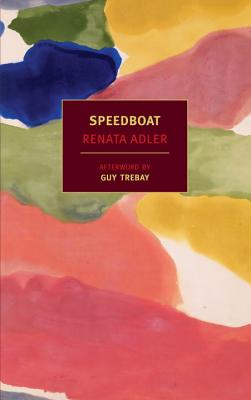
Because I had a gift card and because it had been a while since I just bought a book off the shelves, I bought Speedboat by Renata Adler and I Await the Devil's Coming by Mary MacLane. The book world was talking about both of these books and I was intrigued. They're both awesome in ways I'll describe later, but they got me thinking about the phenomenon of author re-discovery, of an author, living or dead, who lapsed out of literary consciousness suddenly reappearing. Last year this happened to Clarice Lispector. This year, Adler, MacLane, and also James Salter, are early contenders for the re-discovered author of the year title.

This process of re-discovery highlights some interesting characteristics both about literature itself and how readers interact with literature.

Re-discovery might actually provide more insight into the taste of the times than what is currently popular, because it demonstrates a direct contrast between what is valued now and what was valued when the book was forgotten. What do we look for in literature that we did not in the 80s when Speedboat disappeared? What has changed in society that allows us to appreciate a writer like Mary MacLane now? How do books come to popular consciousness?

It's not hard to see why Mary MacLane was forgotten. She was 19 when she wrote I Await the Devil's Coming, which was published in 1902. She proclaims herself a genius, rejects the idea of marriage, approaches the landscape with a passion that might have made Thoreau blush, was unabashedly in love with a woman, and, well, awaited the devil's coming. Though the style can be a bit exuberant (she was 19 after all) there is some fantastic writing, and though we only get the surface of her philosophy in this book, she clearly demonstrates a vibrant and brilliant intellect. A young woman equal parts Nietzsche, Emma Goldman, Oscar Wilde, and Dickinson/Whitman, can gain fame as an oddity, but could not, ultimately, be taken seriously in a patriarchal culture. Why if these were real ideas, then maybe women had real brains and might deserve power. Then...Madness!

It isn't always that clear. It's a strange phrase “before its time,” because the phrase suggests there is something stable and definable about “the times,” something expressible beyond a tautological, if it was written and appreciated then it was “of the times.” Though this is going to sound dismissive, Speedboat reads like the Facebook feed of your most intelligent and interesting friend. The story doesn't move, it accumulates through anecdotes and observations, some of them funny, some of them troubling, all of them strangely brilliant. The narrator is a journalist and all the stories have a kind of journalistic distance, even when she is telling a personal story, like for example, when she got really drunk in Venice with her lover, while they were staying in a shabby apartment with a shared bathroom and she got ended up getting sick and so all the old Italian ladies thought she was pregnant. Oh, and then he told her he had sex with her while she was passed out. Twice. “So I was in despair because six fat women of Venice I would never see again thought I was pregnant by a man who did not want to marry me, and he was in despair because the thought he was a necrophiliac. Both despairs were genuine. It may be that we were retarded. We were younger. We were other people, anyway, in another world.” Whether it's tedious social parties, mysterious upstairs neighbors, writing articles for the newspaper, or the unquestionable yet unavoidable agony of singing Happy Birthday, Adler sees things the rest of us have missed and points out the gaps in our vision with a stunning and wry matter-of-factness. Not a page is turned without me wanting to reach for a highlighter.

Of course, re-discovery isn't just a contemporary phenomenon. Though the way our media can make a phenomenon out of anything, technology and society have forced books in and out of public awareness as long as there has been books. One could argue part of the Renaissance, was the re-discovery of Greek books. Perhaps the most famous, most important re-discovery, at least for American literature, was Moby-Dick, which was published, vanished for a few decades and then was re-discovered as the monumental novel we all love and appreciate today.

Or perhaps it's the same issue of critical mass all books face. There is just a number of readers every book must reach, a number that shrinks and grows depending on the influence of said readers, before it gains general attention. And pretty much everything can contribute or detract from a book's critical mass. Sure there's the political climate, but there's also what other books are being released at the same time, what time of year it comes out, its cover, how the New Times Book Review editor is feeling the day he or she considers the book for review and who they decided to send it to, or maybe Oprah just didn't feel it, you know, how you can appreciate a book, but just not really feel it, or maybe—there's just enough chaos in how books rise to and recede from public awareness to ensure a level of mystery in the popularity (really, vapid Mormon constrained teenage vampires? Really?) or obscurity (It is a crime against the written word that Victor Lavalle and Ron Currie Jr., are not literary rock stars.) of books.

Re-discovery points to one of the fundamental joys and frustrations of loving books. You will never have enough time to read all the great ones. Never. No matter how much of your life you get to spend as a reclusive millionaire where your days are filled only with reading and the other necessary life activities you can accomplish whilst (and at the same time) reading. One of the piles of books in a reader's life is the one of books that just didn't make the cut the last time one reached for a book, and then didn't make the cut, and then didn't make the cut, and then didn't make the cut... We can appreciate the potential quality of the book from the copy, or the author's previous work, or a review from a friend or professional, but...somehow...it just never gets in front of our eyes. And then thirty years later, or fifty years later, or a century or more later, the same mysterious forces that lead you to put the book aside, lead others to pick it up, and those others look back on us, shocked at how we could miss such obvious brilliance in our midst.

Thursday, April 4, 2013

It Makes Perfect Sense...If You Don't Believe Women Are People

As a personal perspective rule, I give people the benefit of the doubt. Working in retail, I see a lot of selfish, thoughtless, behavior, but, in my mind, I find a rational explanation for the behavior. Since I can't really do anything about people acting like spoiled children, I see it as a stress reduction technique, to find an explanation that lets me believe they are rationally acting adults. It's just a lens that lets me come home from work every day NOT feeling like the world is filled with selfish assholes, even if, in many ways, it totally is.

I try something similar with different political opinions. When I encounter a political opinion I disagree with I try to figure out a way for that opinion to make sense to me, going beyond how the opinion holder defends it, to reasons that fit with my logical process. Even if I still disagree with the opinion, I find a way for a rational person to hold it. I do this partially for some of the same reasons as above, but also because it is a lot easier to change an opinion if you actually understand how it came to be. If you can't even imagine how someone could hold an opinion, it's very difficult, if not impossible, to argue against that opinion. Furthermore, sometimes this leads to finding similarities between apparently distant opinions or fundamental common ground, and sometimes I even change my mind, essentially winning the argument for them by exploring my own explanations.

In terms of politics, this was a lot easier ten years ago. At the base of nearly every bad policy/opinion coming out of Republicans and Democrats was a devotion to corporate capitalism rooted in money. Essentially, the defining opinions of that era made sense to me, even if they were wrong, because they ensured somebody made a lot of money, whether it was executives, bankers, or politicians themselves who won elections by running campaigns funded by executives and bankers and then went on to work directly for those executives and bankers and/or the lobbying firms they owned, after leaving office. It's wrong, but I can understand it in terms of personal benefit. Same thing goes for much of the erosion of civil liberties with the Patriot Act; it was wrong, but I could at least wrap my head around how people could come to value it.

But some things have changed and it is a lot harder to make some of the opinions make sense. I can kind of get a handle on the economic elitism of the Republican party, thinking of it as vestigial thinking from the Cold War where “socialism” was the “enemy,” and anything that could be construed as “restraining capitalism,” was “socialism,” mixed with a bunch of rich assholes spending a shit ton of money to make sure nobody notices just how assholic they are.

Apparently all logical roads end here.
But this whole gay marriage will lead to pedophilia and bestiality thing, I mean, what the fuck, dude. I mean, what are you looking at when you can't tell the difference between two adults, an adult and a child, and a person and animal? How do you organize the things in your world in your mind if there is somehow a slippery slope connecting the three? But clearly people not only believe that, but believe it strongly enough to say it out loud to other people holding recording devices. What the fuck, dude?

But still, no matter how crazy it seems, you try to stand on Boo Radley's porch for a moment. If people see those three things as connected, why do I believe they are disconnected? It feels so obvious that it was never a question I'd asked, but there has to be some difference beyond what is apparently apparent to me, for someone to believe they are connected. The fundamental moral, ethical, legal difference between the three is a consenting adult. Gay marriage involves two people who can morally, ethically, and legally give their consent. A child cannot give consent and an animal cannot give consent. In order for there to be a connection between those three things, the idea of a consenting adult needs to be removed. You need to not see that distinction. But in a debate about marriage, how do you not see two consenting adults?

And then, it hit me. It all makes perfect sense...if you don't really believe women are people. If you don't believe women are actually able to give adult consent, then heterosexual marriage involves only one consenting adult, the man. Sure, he asks her to marry him and sure she's not legally obligated to say yes, but that is all more social politeness than moral truth. (And yes, I also know that a marriage between two gay men involves, um, two men, but given that the idea that gay people really aren't people tends to be a corollary belief that contradiction usually just clears itself right up.) Louie Gohmert and Ben Carson can argue that legalizing gay marriage naturally leads to legalizing pedophilia and bestiality because they don't see heterosexual marriage as a marriage between two people, they see it as a marriage between a man and a woman.

Sadly, there's nothing surprising about misogyny, especially from a belief structure that leans heavily on a strict (though selective) interpretation of the Bible (parts of which read like Animal House fan-fiction, no disrespect to Animal House), and which is socially (though not economically, of course) nostalgic for an era when The Man worked (at a union job, but, you know, Unions, Stalin, Lizard People from Mars, OPEN YOUR EYES PEOPLE!) and the Woman stayed home and raised the kids, but I, personally (naively perhaps) find the centrality of misogyny to contemporary conservative politics shocking. I mean, they know women vote right? How exactly do they expect to get elected telling half the population that they are baby vending machines?

Which brings us to what might be a crisis point in American politics. Unbridgeable basic assumptions. All political opinions are ultimately based in irrational assumptions, beliefs that simply cannot be fundamentally proven true or false, and the key to political progress is finding policies that compromise between fundamental irrational assumptions. For example, I think there are tons policy bridges between the humanist assumption “Human life is important” and the religious assumption “Human life is sacred.” We can find ways for there to be fewer abortions in the world, without restricting a woman's right to control her body and her life. (Comprehensive sex education and affordable birth control spring immediately to mind.) I'm not sure there are policy bridges between “All people are people,” and “Some people are people.”

In fact, you can look at the history of American politics through this lens; we started as all believing “Some people are people,” and then parts of our population amended that to “Many people are people,” then “Most people are people,” “Pretty much all people are people,” and finally “All people are people.” Since this division in assumption, the two assumptions have just kind of kluged along between violent crises. We seem to be approaching some kind of crisis now, though there is every indication that the result of the crisis might be the end of the political relevancy of the “Some people are people camp.” The slow progress of justice, despite the best efforts of some, seems to continue.


Thursday, March 28, 2013

Today, the Cat Just Wanted It More: Certainty & Ambiguity in Sports


OK Internet, you win.
Every sporting event is a Schrodinger’s box. At the beginning of the game, there are two possible outcomes; Team X wins or Team Y wins. (A third in sports that allow for ties, and obviously, in sports that have more than one competing entity, say a track meet or a car race, there are as many possible outcomes as there are competitors but the relationships holds.) Just like in Schrodinger's thought experiment, where the cat is both alive and dead until the box is opened, during a sporting event both possible outcomes exist; Team X wins and Team Y wins, until the box is opened at the end of the game. Then the cat is either dead or alive; either Team X wins or Team Y wins.

Actually, a sporting event is an infinite series of Schrodinger's boxes, as every action or occurrence is in itself a Schrodinger's box; either it leads to Team X winning or Team Y winning, and until the box is opened, every action or occurrence does both. Once the game is over, logically, every action or occurrence lead to either Team X or Team Y winning.

Because sports have final scores, there is a level of certainty in sports you can't find in really anything else. Unlike much of life, in sports, we always open the box. At the end of every game (except when there's a tie) we are certain who won. At the end of every season we are certain who the best team is because that team won the championship. We are certain who the best goal-scorer was because that person scored the most goals. You are certain who the best fantasy baseball manager in your league was this year because that person won the title. Sports all come down to points, all points are rational numbers, and so, ultimately, unless something really weird happens, all outcomes in sports are certain.
What monster invented "Reply All" anyway?

Given all the ambiguity we struggle through in our daily lives; did I word that email the best way, what do they actually think of me, who should I vote for, should I just get off at Park Street and walk, etc, etc, etc, I've always believed part of the appeal of sport is its certainty. We can actually know something for real. But then, when we think and talk about sports, we tend to add all the ambiguity of life back in, even when the outcome is established.

So you find analysts talking about “turning points,” or “big plays,” in a game, where logically, there is no distinction amongst contributors to the outcome of a game. Because Team X won the game, every aspect of the game that preceded contributed to Team X winning the game. We can talk about how athletically difficult a particular play was, how statistically unlikely it was, or how a player performed compared to said player's pattern of performance, but all of those events are inextricable parts of one certain fact: Team X won.

This insertion of ambiguity into certainty can lead to some pretty logically bizarre statements, like this one you'll hear every now and then, “If the Bruins go on to win this game, remember that save.” Sure some saves in hockey are more difficult than others, requiring more technical skill and/or athleticism, and some saves happen in the context of dramatic action, but a save is a save; or to put this differently, the other team scores every time a goalie doesn't make a save, and so, logically, every save is vital to the win (or at least as many saves as is necessary to preserve the point differential, meaning if you win by six, technically, five of your goalie's saves are redundant).

It goes further than that, though, as the insertion of ambiguity is the essential action of all sports discourse. Before the game, it is ambiguity all the time as fans and analysts use preceding patterns to predict future events. (Meteorologists, Bankers, and Sports Analysts: What is three jobs you can be wrong all the time and still get paid?) Then Team X wins, and we spend an obscene amount of time debating, discussing, and arguing about how this incontrovertible fact came to be. We analyze the quality of particular players, we scrutinize the calls of the officials, we isolate certain strings of occurrence and apply qualitative judgments to them, and (because this idea isn't already weird enough) we use statistics—the intended antithesis of ambiguity—as one of our primary tools of ambiguity creation, all the while, completely ignoring the truly ambiguous moments of chaos that also contribute to the outcome, for example, to pick at a fresh wound, the Canadiens scoring a goal after a puck bounced off of Dennis Seidenberg's face and landed right in front of Gallagher, or when the tying goal was scored after a totally ambiguous totally unlucky penalty, off Chara's stick. “Experts” in the field can observe the exact same phenomena and from the exact same certainty (man, Team X is killin' it.) come to entirely different and often passionately held conclusions.

If you're following the logic, you can see a paradox growing. The definitive fact that separates sport from just about everything else in daily experience, is certainty, and yet nearly all of the emotional engagement of sport is through the creation of ambiguity. And, since we're on the topic of the absolute madness of human emotions, the point of that created ambiguity is almost always conflict; induced ambiguity for the expressed goal of disagreeing with each other. Essentially, we take an absolute certainty, inject every single identifiable aspect of it with ambiguity for the expressed purpose of having one (or four) too many drinks and shouting at each other about it. Sport provides us with a perfect balance between certainty and ambiguity; an inarguable fact as a base for damn near endless and often passionate debate.

There are many different layers to the powerful emotional appeal of sports on people. There's the sense of community and identity, there's the camaraderie among athletes and the vicarious camaraderie fans can feel, and there's the visual physical beauty; but there's also the consequence free conflict engendered by the balance of certainty and ambiguity. No amount of debate will change the outcome of the game, and with a few rare exceptions, you won't lose your job or get killed in the context of a sports argument. The result is an experience that reasonably approximates the thrill of combat with no personal risk. Those of us not lucky enough to play sports for our whole lives, still get to compete in them, and even if the box of our debates is never opened, (except, of course, for all the times I am clearly right) we can get, at the very least, a taste of sinking the shot, scoring the goal, making the catch. (In a bar. After all of our other friends stopped caring. But still. It counts.)

Thursday, March 21, 2013

The Most Commercially Successful Work of Experimental Fiction Ever Written

Don't worry, my piece is atonal ontological.
Picture this scene, feeling free to add berets and hipster glasses if you like: A group of men gather at a pub near a university campus. One of them leans forward and tells the others he's got an idea for a new book, something to really blow the minds of everyone who bought into the twaddle he tossed off a few years ago. Being literary young men at a pub near a university campus, they want to hear it. OK, the first thing he tells them is that the novel is going to have an appendix, yeah, that's right, an appendix for fiction; a footnoted appendix with songs, poems, and histories of stuff that happens hundreds of years before anything in the book itself. One asks if they'll be an index. Naturally, he scoffs. Then he moves on to explain that he's drawing extensively from medieval stories, mostly Beowulf but other historic mythologies, to, essentially, re-create, with as much authenticity as possible, a speculative Saxon mythology. (Did he mention, that with the price of paper being what it is, he'll probably need to break it up into several volumes, but one must sometimes compromise.) And he's going to use his hyper-academic understanding of linguistics to invent like, five languages, including their alphabets, their histories, and as much of their surrounding culture as he can squeeze out of his brain before he dies. He concludes his description (after sipping from a local craft beer, of course) by saying he's more creating a life's project than writing what most would consider a “book.” You know, he doesn't want to be limited by what corporate publishing thinks is a story. Sounds, in a lot of ways, like James Joyce or maybe even David Foster Wallace or someone from the linguistically and systemically obsessed Oulipo, or maybe even one of the Hungarian novelists like Peter Nadas or Lazlo Krasznohorokai. Probably published by Melville House or Dalkey Archive, or maybe New Directions.

With a goddamn index.
Of course, I'm describing The Lord of the Rings, and, with that description, contending that Tolkien's novel is simply the most popular work of experimental fiction ever written. Need more proof its experimental?

Tolkien was a professor and scholar of dead languages. Does it get any more ivory tower than that? His characters, for the most part, were recreations of Old English heroes. As I mentioned above, he did to Beowulf what Joyce did to The Odyssey, re-appropriating major aspects of the historic story (Hrothgar is referred to as “the lord of the rings,” because he would give chain mail as gifts.) to modern themes and sentiments. And then there's his storytelling structure and style. As highlighted by what's left out of the movies, Tolkein wandered pretty far afield from his core plot. Can you imagine what a sane editor would have done when reading the Council of Elrond, a 42 page committee meeting, where freaking everybody has something to say? (Yes you can. Said editor would cut it.) In The Two Towers, rather than weaving back and forth between the two sets of characters, as the movie does, as any editor would suggest, as nearly every reader would expect, he tells the entire story of one set of characters (Aragorn and Friends) and then tells the entire story of the other set of characters (Three's Company). The Appendix have footnotes. There's even an index. And let's not forget the last little bit of daring forced on Tolkien by the bold publisher swept up in the euphoria of originality; the title of the third volume GIVES AWAY THE ENDING. (Which, since we're talking about plot structure, the book has a whole extra mini-climax, The Scouring of the Shire, with a much smaller battle with much lower stakes happens, AFTER the SINGLE MOST IMPORTANT BATTLES THE WORLD HAD EVER KNOWN. Seriously. It's like ending a James Bond movie with a few minutes of Bond bitching about his cable bill.)

Appropriate signage could've saved the empire.
Finally, there is, at least to me anyway, Tolkien's most important and most groundbreaking creation; Gollum. An ordinary man caught by forces beyond his control who ends up living a life of addiction only to be given one chance to redeem the content of his life and in the crisis moment is overcome by those very same forces that condemned him to tragedy in the first place and it is only through folly (Seriously, dude. The literary cajones Tolkien had to make the destruction of the ring a freaking accident, I mean, the climax of the book is a slip and fall.) that his personal curse is lifted and with it, the threat all of Middle Earth. I can think of two, maybe three, characters with equivalent complexity and contradiction; Lucifer from Paradise Lost and Don Gately from Infinite Jest, with maybe, Quentin Compson from The Sound and the Fury and Absalom! Absalom!.

Christopher Tolkien's used bath wather.
Even when discussing Tolkien's impact on modern literature, everyone pretty much says “The Lord of the Rings is an experimental novel,” without ever using the word “experimental.” Everyone is always saying how groundbreaking it was, how nobody had ever written anything like it before, how it met a previously unmet cultural need, and how Tolkien essentially invented an entire genre of fiction. In short, shift a few terms around to match specifics, remove a gigantic pile of cash, and you find that people talk about The Lord of the Rings the exact same way they talk about Ulysses.

See those books? Dead languages. All of them.
The point is not really that The Lord of the Rings is an experimental novel (though it is) but that somehow the idea of “experimental novel,” has become automatically associated with elitist academics and willfully obtuse authors, (Side note, I don't think such a thing exists. Writers write to be understood and just because a writer's particular vision is difficult to grasp doesn't mean that writer is intentionally trying to avoid being grasped. That would defeat the entire fucking point of writing.) with books that are needlessly difficult and frustrating whose only purpose is to prove to somebody just how smart the author is or how smart the few readers that read it are. (Something similar has happened to the term “post-modern” as well.) (Oh, and since we're talking about authors proving how smart they are; TOLKEIN INVENTED ENTIRE FUCKING LANGUAGES. How the hell does that not count as showing off?) This association misses two key factors.

The first: by definition, some experiments are supposed to fail. As authors try new ways of telling stories, some of those ways are going to totally suck. Or, some of those ways will connect with some readers, while not with others. That's how experiments work, by trying everything everybody can think of until we find something awesome. In fact, you shouldn't like every experimental novel you read. (even I don't, e.g. could not get into One, the “novel,” whose words were written by Blake Butler and Vanessa Place, and then stitched together by Christopher Higgs, as solid an experimental writing pedigree as you can have. It never seemed to find its footing and, in a way, Higgs did too good of a job combining the two other authors as I did not feel what I thought was going to be a very interesting tension.) If you do, then writers aren't experimenting hard enough. This is a long way of saying that not liking a particular experimental work or two (or even all of them you've encountered) doesn't mean there's something wrong with experimental work, it is just an inherent and vital outcome of trying something new.

The second: All mainstream was once cutting edge. This next sentence is going to be very difficult for me to write, but it's true. Jane Austen was cutting edge. So was Dickens. So was Twain. And, in an unprecedented and truly shocking way, so was Tolkien. Like everybody else, we suffer from a myopia of the present and so, to us, the novels we read feel like monuments of storytelling, reflections on some Platonic act of meaning, whereas they are actually just one point on a lineage of experimentation, failure, and success; a lineage that stretches back to the origins of written culture and extends as far into the future as we do. Tolkien is such a part of pop culture now, we forget how radical his book really was. If there are no experiments now, there will be no Jane Austens in the future.

Writers of literature write the books they need to, the books clamoring around in their skulls, keeping them up at night, nagging them in the shower, interrupting their conversations at parties. Some writers have committed themselves to finding new ways to write the books in their head, either because they value newness itself or because whatever is in their head doesn't fit in the available forms or, in the case of the best works of experimental fiction, like Ulysses and, at least from a commercial standpoint, the Lord of the Rings, because they value the new and their story will only fit in the new. Of course, this is all part of my ongoing campaign to reclaim the act of experimentation in literature and not just literature on the fringes, or literature read by other writers of literature, but literature in the popular consciousness, literature on the IndieBound Bestseller list, literature in the few remaining major book reviews. And things do seem to be changing. The Franzenphobia of a few years ago, where it seemed like every major book was another extension of Carver and Hemingway with a touch of Garcia Marquez seems to be fading, and you see A Visit from the Goon Squad win a Pulitzer and I Hotel as a finalist for the National Book Award and Mark Z. Danielewski gets major review coverage, along with the unique (if not quite experimental) storytelling voices of Justin Torres and Karen Russell and you see writers beginning to take risks and publishers bringing those risks to the public. In short, readers shouldn't denigrate or shy away from the experimental, because there is a chance that your favorite book was, at least for its time, an experimental novel.