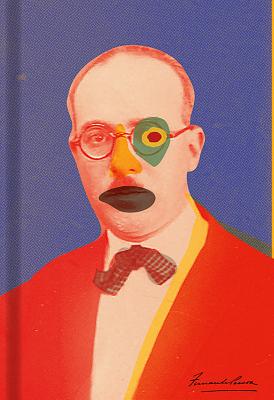
There is a story here. I know it doesn't look like a story, that it doesn't have the plot you expect from a story or the characters you expect from a story or the relationships you expect from a story or the arc of events you expect from a story, but I assure you it is a story. It is a story about the course of consciousness, the nature of thought, the self's consideration of the self, the existence of the brain in the world. It is a story about figuring shit out, about our inability to figure shit out, about the mechanisms of understanding both the grand abstract concepts that drive art and philosophy and the bullshit your boss does in the office, and it is a story about the limitations of those mechanisms, the gears of the mechanisms, the grease of those mechanisms.
The thing is, unlike most stories, we all experience this story every day. We all think about the shit that happened to us and we all think about the best way to think about the shit that happened to us, and sometimes we come to conclusions and sometimes we don't and sometimes we come to different conclusions later that make those first conclusions look really fucking stupid. This is a story about how we are and how we become meaningful. But to see The Book of Disquiet as a story, to see it as distinct from a fictional diary or collection of disconnected musings you need to learn to read it as a story.
Not all books can or should be read in the same way. This is one of those ideas that sounds strange, but once put into context, is almost obvious. You would read a collection of poetry differently than you would read the next installment in your favorite fantasy epic; you would pay attention to different details, keep different types of information at the forefront of your mind as you read, and react to your own reactions differently. You read a collection of essays differently from a collection of short stories, a work of literature differently from a work of entertainment, a work you have some doubts about differently from a work your best friend swears by. Furthermore, you can even read the same book differently, depending on the context. For example, you read a book differently when you read it for a class or for a book club from when you read it for fun. Some books, the books I often consider the greatest books, need to be read differently from every other book, and one of their responsibilities and one of the definers of their greatness is that they teach you how to read themselves. So The Book of Disquiet, rather than starting with some kind of introductory passage that would try to frame this as a collection of diary entries or, at least, as a collection of distinct units, begins with a story. A story about how the “author” came to meet “Vicente Guedes,” the “writer” of everything else that will follow. Furthermore, the opening image of the first “entry” is of a “hidden orchestra” and a “symphony” or, to put it another way, of a particular type of human expression in which a series of distinct acts come together to create a unified experience.
This is a story because, directly and indirectly, through confronting the concept and through atmosphere created by the prose, the book returns again and again to one particular idea, and explores how that idea describes the narrator's experience with the world. The narrator may not change, the events may not change, the rising and falling action we associate with a plot might not happen, but the nature of this idea changes and does go through the rising and falling action we associate with a plot. In a way, the book feels almost like someone worrying at a loose tooth, but that is a story. There is conflict, there is tension (will the tooth fall out?), and ultimately, there is resolution. The concept, of course, is disquiet. Disquiet is a mercurial idea, and the narrator rolls it around in his hands, bending and stretching into different shapes, but, if I had to define it in some kind of, uh, definite way, I'd say that Pessoa's disquiet is the parallax created by the separation between existence and observation, from the fact that observing what happens and how you feel about it is distinct from what actually happens and what you feel about what actually happens. Disquiet names the perpetual Heisenberg uncertainty principle that is an inherent aspect of consciousness itself. There is a synapse between us and the world and disquiet is the emotion we feel when we think about that synapse.
This is a story about disquiet in the exact same way that In Search of Lost Time is a story about memory. The difference, of course, is in the angle of approach. Proust takes the long way (perhaps, the absolute longest way), showing the accumulation of memory over the course of a life and how the force of memory guides and shapes a life as a way to consider the ideas that describe memory. It is a long, slow build up that climaxes when a small moment triggers the emotional experience of what the fact of having memory means. It takes Proust thousands of pages to set up this climax because memory is a book with thousands of pages. (I, for one, think it's worth it.) Pessoa just goes right at it, his narrator confronting the idea directly and rarely with any kind of “real world” connection. In a way, this makes The Book of Disquiet read more like a work of philosophy or even of literary criticism (there is a lot about the act of writing in here as well), but, in a way, you can arrange any good work of philosophy into a story about an idea if you want to.
But, just because this is a story doesn't mean you need to read it as a story. Along with teaching you how to read themselves, great books also support multiple reading methods, giving readers the power to find their own best experience with the text. You could also read The Book of Disquiet as a devotional or a book of hours. You could keep it at your bedside to read upon waking or before going to sleep. You could read it front to back like a story, or you could wander through it. I think you could also get tremendous value out of it, even if you never finish it, even if you just keep circling back to the passages that most resonated with you. The Book of Disquiet is a story, but it is a story that gives your the freedom to read it as though it is not.
I've dogeared hundreds of passages. I have had my breath taken away hundreds of times. The primary motivation for writing this post wasn't necessarily the argument that the The Book of Disquiet is a story (though I think it is and I think that argument gave me the chance to have some interesting thoughts about how we read and what we consider a “story”), but that when I experience this kind of brilliance in a book I want to write about it. But I didn't want to just essentially string of bunch of blurbs together and call it a post. There can be a kind of diminishing return when you gush about a book. At some point you don't really add to your argument and at another point people can start getting suspicious and at a similar point you can set expectations so high a first impression of disappointment will follow them throughout the rest of the book. The Book of Disquiet is a masterpiece, a cornerstone of much twentieth-century fiction, an often perplexing but also delightful book, and as much as it deserves praise, as much as it deserves blurbs and handsells, it deserves essays more.
Like my bookish writing? Support my work on Patreon.
Showing posts with label Modernism. Show all posts
Thursday, August 10, 2017
Monday, June 1, 2015
Cartography of Literary Movements
I was writing a review of the history of Dada when an idea came to me. Dada as an art and literature movement has always fascinated me, but defining it, almost by definition, is impossible. You could attribute key traits, key figures, and major works, but Dada itself asked for multiple often contradictory definitions. Sometimes within the same manifesto an artist or writer would offer a handful of definitions none of which agreed with each other. The author of the book organized it geographically, focusing on the specific cities where Dada was most active, rather than telling the story chronologically or organizing it around Dada's prominent practitioners. Though the author never said it, his structure gave me an idea, an image that helped me pull together my various strands of thought on Dada. Dada is a place.
The bad thing about blog posts is that they are often un-third-party-edited pieces written in the heat of the moment without a lot of research and reflection and the good thing about blog posts is their "first draft" nature allows you to essentially workshop an idea before sinking all of that time and effort into pursuing it. They represent a public starting point for an idea that may or may not go anywhere. They can be that moment at a party, where you say, "Hey, I want to run this idea by you guys," and you just see what happens. Or, along a similar lines, that moment at a party where you say, "I have to get this out of my head so I don't end up dead in the bathtub from an aneurism." They can begin a conversation or they can be met with a few moments of awkward silence before somebody shifts the conversation back to something people actually want to talk about, like Deflategate or the Republican presidential field or how cultural context and privilege can allow for the mainstreaming of outright goddamn fucking insanity. Long time readers of my blog (if there are any) could probably categorize nearly all of my posts as either "conversation testers" or "aneurism preventers." This post is the former.
Just like most young American couples, my partner and I spend a lot of time casually chatting about the transition from and distinctions between post-modernism and whatever it is that's happening now. Though I feel like we have some decent ideas or at least plausible theories, this is still a tricky consideration in part, because post-modernism is still happening. There are still plenty of authors *cough* *cough* writing in the narrative and stylistic space opened by post-modernism. But there are also plenty of (probably many more) writers working in the narrative, thematic, and stylistic space created by modernism, and, depending a bit on how you define terms, there are plenty of Romantics still kicking around. The true breakthroughs in human expression that we tend to describe in terms of literary movements create far more potential than can be fully explored by the generation that made the breakthroughs themselves, and so they linger, persist, or even dominate literary discourse (as I would argue modernism has) long after new ground has been broken. So the chronological brackets we often use to differentiate literary movements, are at best incomplete terms of convenience and at worst factual inaccuracies or misunderstandings.
But defining literary movements by who we consider to be a member of said movement has pretty much the same problems as the chronological definitions. We think of Joyce as an avatar for modernism, and rightly so, but he also wrote Finnegans Wake, which I don't think is a modernist work at all. (It might not even be post-modernist, or post-post-modernist, but that's a discussion for another post.) Nabokov's Pale Fire might be one of the pinnacles of post-modernism, but none of his other work really fits squarely into any of the available movements and his absolute faith in the authority of the author, even when, in Pale Fire, he ceded so much control to the reader, really prevents him from being a true post-modernist no matter how much his work twisted, bent, and deconstructed language. And then there's David Foster Wallace, far more conscious of where he fit in terms of literary movements than the others, whose great post-modern epic, Infinite Jest, was also very much striving for, looking forward to, working its fucking brains out, to get to something beyond post-modernism. Where would you put him? Sure, many authors intentionally fit themselves in or work to create specific literary movements, but many others flutter between bordering movements, don't work with any intentions at all around movements, or are only subsequently associated with movements by critics.
But what if, instead of thinking about art movements chronologically or membershipically, we think about them cartographically? What if it's not just Dada? What if all movements are best thought of as places? Think of them as cities carved out of the wilderness by daring explorers, that, once established, can be inhabited or visited, can become a core part of an artist's identity or be just another stop in a long itinerary of adventure. Or can be skipped entirely. And works can travel just as easily from city to city as artists can. So you have Ulysses, which was a pinnacle of modernist literature and began to scrape a shovel over the ground that would eventually become Post-Modernism City.
With all due respect to Deflategate, The Life and Opinions of Tristram Shandy: A Gentleman, is arguably the greatest post-modern novel ever written, if, for no other reason, than it is able to embody all the narrative, stylistic, linguistic, and formal experimentation and freedom that made post-modernism important, without all of the paranoia, irony, and cynicism that so limits post-modernism's enduring value. In some ways, you could argue that David Foster Wallace, in Infinite Jest, and, potentially in The Pale King, was writing towards a self-aware joy in the mundane that Sterne so beautifully captured. (Must have been nice, writing before the Cold War.) So Tristram Shandy has always raised something of a problem for our understanding of post-modernism and, of the course and development of Western literature, but only if we set rigid borders of chronology and membership on literary movements. If “post-modernism” is just a place, Sterne just happened to get there first and it was a long time before anyone else was able to rediscover it. Think of him as a Leif Erikson of Western literature.
Finally, the image of a city allows for the kind of sub-division and categorization that I think can be useful in understanding and getting something out of a work. Cities, despite often presenting unified identities, are not homogeneous. Telling someone you live in New York City, does give them important information, but only up to a point as vastly, vastly different experiences can be contained in “New York City.” Even telling someone you live in “Brooklyn” or “Manhattan” or any of the other boroughs only goes so far. Some literary movements, post-modernism for example, are similarly fractured, containing vastly different, but still somewhat unified, forms of expression. And just as with cities, some literary movements present more unified and specific identities. And, of course, places can “declare independence” from each other. And you bet literary movements can be colonized, as Surrealism did to Dada.
Of course, this is just a metaphor, but the way we talk about things and the terms we use to describe them affects how we think about them. I, personally believe (at least with all of the rigor of a blog post) that the language and image of place leads to more productive and satisfying thoughts and conversations about art and literature, in part, because it lets us use the structure of “literary movements” more fluidly as a tool for understanding and describing a specific work without all the baggage of imposed historicity. The image of the city is a lot freer than some of the other terms. The membership is more open. If you can get there (i.e. create a work that fits in with its neighbors) than you belong in the city, no matter who you are or when and where you create. (Hell, Tolkein wrote the greatest medieval epic.) Nor are you confined to that city once you've arrived. You can write a Romantic novel, a modernist short story collection, and a post-modern epic poem if you want to. And, for me at least, I think this more accurately describes the creative process. Sure, some artists intentionally create to fit in, explore, or exploit a particular movement, but I suspect, even with those intentional works, the process of creation lead them there first and it was only after they discovered their own story, idea, message, interest, that they focused their work in a particular vein. Finally, I think the city image more accurately describes the inter-textuality of works of literature, allowing for community and conflict, references and relationships, identity and politics. The city is a complicated place to be a human in, and yet, most of us succeed at least on some level in doing so. I think that human success in space is a powerful analog for the literary successes in art that end up being identified as movements.
But, what, I have to ask myself, does this matter? What does it matter how we talk about literary movements? I've said this before in other contexts and I'll say it again here; there is a difference between literacy and reading, and the structure of our education system (despite the best and often successful efforts of individual teachers) is not good at teaching reading. In short, the most important aspects of literature, the benefits of literature that contribute to emotional understanding, media awareness, and political faresightedness, don't fit into pop quizzes. (Or multiple-choice quizzes, or, often, even short essays.) And, of course, our learning about and through literature doesn't have to stop at graduation. Anything anyone who loves literature can add to the conversation, that helps more readers actively engage with the aspects of literature that contribute to more empathetic, nuanced, and multi-step thinking and decision making will benefit our world. Will my image, explored with all the rigor of a blog post, help? Doubtful, but if you don't try...
The bad thing about blog posts is that they are often un-third-party-edited pieces written in the heat of the moment without a lot of research and reflection and the good thing about blog posts is their "first draft" nature allows you to essentially workshop an idea before sinking all of that time and effort into pursuing it. They represent a public starting point for an idea that may or may not go anywhere. They can be that moment at a party, where you say, "Hey, I want to run this idea by you guys," and you just see what happens. Or, along a similar lines, that moment at a party where you say, "I have to get this out of my head so I don't end up dead in the bathtub from an aneurism." They can begin a conversation or they can be met with a few moments of awkward silence before somebody shifts the conversation back to something people actually want to talk about, like Deflategate or the Republican presidential field or how cultural context and privilege can allow for the mainstreaming of outright goddamn fucking insanity. Long time readers of my blog (if there are any) could probably categorize nearly all of my posts as either "conversation testers" or "aneurism preventers." This post is the former.
Just like most young American couples, my partner and I spend a lot of time casually chatting about the transition from and distinctions between post-modernism and whatever it is that's happening now. Though I feel like we have some decent ideas or at least plausible theories, this is still a tricky consideration in part, because post-modernism is still happening. There are still plenty of authors *cough* *cough* writing in the narrative and stylistic space opened by post-modernism. But there are also plenty of (probably many more) writers working in the narrative, thematic, and stylistic space created by modernism, and, depending a bit on how you define terms, there are plenty of Romantics still kicking around. The true breakthroughs in human expression that we tend to describe in terms of literary movements create far more potential than can be fully explored by the generation that made the breakthroughs themselves, and so they linger, persist, or even dominate literary discourse (as I would argue modernism has) long after new ground has been broken. So the chronological brackets we often use to differentiate literary movements, are at best incomplete terms of convenience and at worst factual inaccuracies or misunderstandings.
But defining literary movements by who we consider to be a member of said movement has pretty much the same problems as the chronological definitions. We think of Joyce as an avatar for modernism, and rightly so, but he also wrote Finnegans Wake, which I don't think is a modernist work at all. (It might not even be post-modernist, or post-post-modernist, but that's a discussion for another post.) Nabokov's Pale Fire might be one of the pinnacles of post-modernism, but none of his other work really fits squarely into any of the available movements and his absolute faith in the authority of the author, even when, in Pale Fire, he ceded so much control to the reader, really prevents him from being a true post-modernist no matter how much his work twisted, bent, and deconstructed language. And then there's David Foster Wallace, far more conscious of where he fit in terms of literary movements than the others, whose great post-modern epic, Infinite Jest, was also very much striving for, looking forward to, working its fucking brains out, to get to something beyond post-modernism. Where would you put him? Sure, many authors intentionally fit themselves in or work to create specific literary movements, but many others flutter between bordering movements, don't work with any intentions at all around movements, or are only subsequently associated with movements by critics.
But what if, instead of thinking about art movements chronologically or membershipically, we think about them cartographically? What if it's not just Dada? What if all movements are best thought of as places? Think of them as cities carved out of the wilderness by daring explorers, that, once established, can be inhabited or visited, can become a core part of an artist's identity or be just another stop in a long itinerary of adventure. Or can be skipped entirely. And works can travel just as easily from city to city as artists can. So you have Ulysses, which was a pinnacle of modernist literature and began to scrape a shovel over the ground that would eventually become Post-Modernism City.
With all due respect to Deflategate, The Life and Opinions of Tristram Shandy: A Gentleman, is arguably the greatest post-modern novel ever written, if, for no other reason, than it is able to embody all the narrative, stylistic, linguistic, and formal experimentation and freedom that made post-modernism important, without all of the paranoia, irony, and cynicism that so limits post-modernism's enduring value. In some ways, you could argue that David Foster Wallace, in Infinite Jest, and, potentially in The Pale King, was writing towards a self-aware joy in the mundane that Sterne so beautifully captured. (Must have been nice, writing before the Cold War.) So Tristram Shandy has always raised something of a problem for our understanding of post-modernism and, of the course and development of Western literature, but only if we set rigid borders of chronology and membership on literary movements. If “post-modernism” is just a place, Sterne just happened to get there first and it was a long time before anyone else was able to rediscover it. Think of him as a Leif Erikson of Western literature.
Finally, the image of a city allows for the kind of sub-division and categorization that I think can be useful in understanding and getting something out of a work. Cities, despite often presenting unified identities, are not homogeneous. Telling someone you live in New York City, does give them important information, but only up to a point as vastly, vastly different experiences can be contained in “New York City.” Even telling someone you live in “Brooklyn” or “Manhattan” or any of the other boroughs only goes so far. Some literary movements, post-modernism for example, are similarly fractured, containing vastly different, but still somewhat unified, forms of expression. And just as with cities, some literary movements present more unified and specific identities. And, of course, places can “declare independence” from each other. And you bet literary movements can be colonized, as Surrealism did to Dada.
Of course, this is just a metaphor, but the way we talk about things and the terms we use to describe them affects how we think about them. I, personally believe (at least with all of the rigor of a blog post) that the language and image of place leads to more productive and satisfying thoughts and conversations about art and literature, in part, because it lets us use the structure of “literary movements” more fluidly as a tool for understanding and describing a specific work without all the baggage of imposed historicity. The image of the city is a lot freer than some of the other terms. The membership is more open. If you can get there (i.e. create a work that fits in with its neighbors) than you belong in the city, no matter who you are or when and where you create. (Hell, Tolkein wrote the greatest medieval epic.) Nor are you confined to that city once you've arrived. You can write a Romantic novel, a modernist short story collection, and a post-modern epic poem if you want to. And, for me at least, I think this more accurately describes the creative process. Sure, some artists intentionally create to fit in, explore, or exploit a particular movement, but I suspect, even with those intentional works, the process of creation lead them there first and it was only after they discovered their own story, idea, message, interest, that they focused their work in a particular vein. Finally, I think the city image more accurately describes the inter-textuality of works of literature, allowing for community and conflict, references and relationships, identity and politics. The city is a complicated place to be a human in, and yet, most of us succeed at least on some level in doing so. I think that human success in space is a powerful analog for the literary successes in art that end up being identified as movements.
But, what, I have to ask myself, does this matter? What does it matter how we talk about literary movements? I've said this before in other contexts and I'll say it again here; there is a difference between literacy and reading, and the structure of our education system (despite the best and often successful efforts of individual teachers) is not good at teaching reading. In short, the most important aspects of literature, the benefits of literature that contribute to emotional understanding, media awareness, and political faresightedness, don't fit into pop quizzes. (Or multiple-choice quizzes, or, often, even short essays.) And, of course, our learning about and through literature doesn't have to stop at graduation. Anything anyone who loves literature can add to the conversation, that helps more readers actively engage with the aspects of literature that contribute to more empathetic, nuanced, and multi-step thinking and decision making will benefit our world. Will my image, explored with all the rigor of a blog post, help? Doubtful, but if you don't try...
Subscribe to:
Posts (Atom)

