Thursday, March 15, 2012

My Entirely Too Long, Incredibly Wonkish Book Industry Post: Extravaganza!

With Amazon getting into publishing, removing buy buttons for all the Kindle editions of books distributed by the Independent Publishers Group, and now the suspected or threatened Department of Justice price-fixing lawsuit against Apple and five-major publishers, the book industry has been in the news a fair amount. This is following all the attention caused by Amazon's price check app and the demise of Borders. What's frustrating about all this coverage is that even the articles and reporters sympathetic to the industry, often leave out key aspects of the economics of bookselling. So you (or at least I) read through the comments to see what people think about Amazon, indie bookstores, the price of e-books, etc, and find most of the opinions, again, even those with a positive take on indie bookstores, are based on incorrect assumptions. Part of this is because contemporary American journalism doesn't spend much time on context, part of this is because the most powerful actor in bookselling, Amazon, benefits from these misconceptions (so much more on them later), and part of it is, well, I don't know much about the bikeselling or beerselling, so there's a natural who's-got-the-time ignorance.

This is important because just like bikeselling (fossil fuel free urban transportation and fitness!) and beerselling (beer!), bookselling contributes to the strength and vibrancy of our culture beyond the actions of economic exchange. And these misconceptions, as innocent as most are, will lead to a situation where one entity controls the vast amount of book production and distribution of books in this country, and then, as is typical of super-villains, the world. We all remember how well having monopolies running things worked out in the late 1800s. So, if you already know all this stuff, (because, let's face it, if this goes around on the Twitter, it'll go around the BookGalaxy of the Twitterverse) correct and comment. If you don't, I hope you can just keep some of this in mind when you're clicking or shopping around for your next book, or at least while you're reading book industry news.

Now, you're reading this on the internet, so I know the odds are pretty slim that all of you are going to get all of the way through this post. (Though fans of really, really extended metaphors are in for quite a treat.) So, here my basic points. Read on if you want evidence, nuance, and depth, but I won't be insulted if it gets too wonky and too long for you.
      1. Most retail stores buy their goods from producers and wholesalers for $X per item. Bookstores buy their books at X% of the cover price of the book, regardless of whether or not the actual dollar amount that works out to is profitable for that book at that store in that market. It's like the road not taken, because it makes all the difference.
      2. Amazon's books are cheaper than everyone else's because they lose money on pretty much every new book they sell. Their prices aren't “cheap,” they're subsidized by the other goods they sell as well as by the dozen plus other companies they own.
      3. Using a particular item as a loss leader for a particular time is very different from using an entire industry as a loss leader all the time. One is a long-standing retail technique and the other distorts a market and devalues the products in it.
      4. Initially, the overhead for ebooks is not significantly less than the overhead for print books and so, initially, ebooks should not be priced significantly lower than print books. (Notice the adverbs.)
      5. (I know, five points, but I warned you.) If books are important to you and/or you believe books are important to culture in general, don't buy all of your books from Amazon. No problem with buying some. Even buying most is acceptable. Shifting 10% of your Amazon purchases will save the entire world.

The Biggest Most Significant Difference Between Selling Books and Selling Just About Everything Else.

Bookstores purchase books for retail from wholesalers and publishers at a discount of the cover price. Most retail stores buy their goods from wholesalers or producers at a set per-unit price. For example a grocery store might buy bananas at $.23 per pound from a produce wholesaler. Then, they are free to charge whatever they want for those bananas, marking them up really high if there is a lot of demand in their store for bananas, using them as a loss leader by setting the price low, or something in the middle. In calculating their mark up, they'll figure in all the overhead that goes in to getting those bananas from the wholesaler to the buyer, most of which is staff time, but there's also transportation, utilities, meeting health and safety standards, etc. Then they'll add something on top of that, representing their profit.

This model allows for a lot of price flexibility. This is why bananas at the convenience store tend to cost more than at the grocery store. If you're buying bananas at the convenience store, there is probably some reason why you're not buying them at the grocery store, it's closed or not on the way home, whatever, and so, because of a difference in the market, the convenience store price is different from the grocery store price. Anyone who shops around knows that prices often vary from grocery store to grocery store as well, as every grocery store has its own particular micro-market. Who knows, maybe you live in a town with a crippling potassium deficiency. Well if so, your bananas are going to be way more expensive than my bananas. Or maybe the nearest grocery store just happens to be one of the busiest on the East cost, so you're going to pay more (more than the nearest Co-Op, Shaws in Porter Square!) for everything.

But most books are sold on a discount schedule. Book stores usually pay between 45-60% of the cover price, no matter what the cover price is. This means, that their profit margin is based on a price set by the publishers. Regardless of what it costs the bookstore to get the book from the publisher to the reader, and whether or not that particular price is best for that particular bookstore in that particular market, the margin is the margin. With the bananas, the grocery store gets to figure out their overhead and then tack on a little bit more for profit. Bookstores don't have that luxury. Some books, like The Girl Who Kicked the Hornets Nest, which was a bestseller in hardcover for months and months, will work out that there is profit for the bookstores from its sales. Others won't. (Many, many, many others won't.) The grocery store can decide what their profit margin on bananas is, bookstores have to hope (and work like hell) the volume of sales across their entire selection will work out to keeping the lights on and the bills paid.  (And me fed!)

What this works out to a radical absence of flexibility in pricing. For example, maybe a museum in your town hosts a big old retrospective of some artist. The book store in the town can't really take advantage of that market change by tacking on an fifty cents or whatever to the price of the book. (Or dropping it, if they think they'll make it up in volume.) Nor, can bookstores take advantage (like everybody else) of tourist markets by raising the price on their souvenir books. Because, the profit margin has to work out over their entire selection, nor can bookstore really lower the price on particular books. If they do, that lost profit margin is gone.

This is why so many bookstores are filling their stores with cards, gifts, toys, and other “sidelines.” These tend to be per unit priced rather than discounted, so have the price flexibility of those bananas.

This is the most under-reported aspect of bookselling and it leads to most of the misconceptions I've seen in the public. For pretty good reason, people assume books are sold like everything else, and so can be forgiven for using terms like the “indie mark-up” (by the way, has you ever heard anybody talk about the “talented chef mark-up?” I mean, unless you're at a restaurant using organic local produce, the restaurant paid the same thing for those delicious delicious green beans as the crappy restaurant with its wilted flavorless green sticks of vegetable matter. The contribution of a person made them more valuable and so you were totally fine paying more for them. Anyway.) or wondering why books from Amazon are so much cheaper.

Hey, Now that You Mention It, If Books Don't Have Much Retail Price Flexibility, How Come They're So Cheap on Amazon?

I'm glad I made you ask. First of all I do believe there is a reasonable “business model discount” that Amazon can offer. Their national volume of sales, online-only business does have some lower overhead, and they have done a good job of occasionally finding ethical ways of shaving that overhead (like paying a little bit extra to have a particular model folding chair boxed at the factory instead of at the warehouse). I'm sure someone could do some rigorous calculations about this, but just from my own anecdotal experience working in a store, I would estimate, that the Amazon business model could offer a 10-20% discount to its customers.  (Not bad at all, really.) But that's not the discount Amazon tends to offer.

The next chunk of percentage comes from the fact that their warehouse workers are overworked and underpaid as has been reported in a number of recent articles. (Which is a pretty generous statement. Circlesof Hell, was implied.) To get the next percentage point, they use their market share and volume of sales to coerce publishers into giving them better discounts, basically saying, if you don't give us a better discount than you give other retailers, we will not buy your books. You don't hear about this too much from the big publishers, but Denis Johnson, of the totally kickass Melville House Books, and other smaller publishers have chronicled this.

But I'm going to spend the bulk of my time talking about two restaurants that specialize in wine. (Told you there'd be extended metaphors.)

There are two mid-scale restaurants in Metaphortown; Bob's and Robert's. At Bob's there is always a sommelier on duty to suggest pairings, explain specials, answer wine questions, and in general help patrons pick out wine. Though it has an extensive wine list, Robert's doesn't. Because Bob's business model has more overhead, wine at Bob's is a little more expensive. If you just want a decent glass of wine for $8, Robert's is your place. But if you're looking for the best wine possible for your taste and your meal, you'll only get it at Bob's, and it'll probably be $12. But the owner of Robert's is also the owner of Robert's Cars, a very profitable car dealership and so, because the car dealership is making tons of money, Robert's starts selling wine at $5 a glass. Essentially, Robert's is subsidizing his wine, with profits from the car dealership. Bob's is obviously in trouble. Sure, a sommelier selected wine is worth more, but $7 more? Since wine was Bob's thing, Bob's goes out of business. This means that Robert's now has a significantly higher percentage of the wine market and, Robert, being a shrewd businessman, can now go to the wine wholesaler and negotiate for better net prices. Which he uses to lower the still-subsidized-by-car-sales price to $4 a glass, which puts Roberta's out of business and causes some of the other restaurants in the area to just stop offering wine, which increases Robert's share of the market. Since a higher percentage of their sales are going to the super discounted Robert's, the wholesalers' margins are cut, so they have to find a way to make up the difference, which means they have to renegotiate their deals with the vineyards themselves, which will force the vineyards to cut costs, which is mostly likely going to come out of the workers salaries and Ta Da! author advances decline for a decade.

We all know that Amazon sells lots of stuff besides books, but the full reach of their business doesn't usually get reported. Did you know about Amazon Web Services, that sells a whole bunch of internet and data services? Or that Amazon owns, PlanetAll, Junglee, Bookpages.co.uk, IMDB, Alexa Internet, Accept.com, Exchange.com, CD Now, Joyo.com, BookSurge, Mobipocket, Createspace.com, Shopbop, dpreview.com, Brilliance Audio, Aubible.com, Fabric.com, Box Office Mojo, AbeBooks, Shelfari, BookFinder.com, Gojaba.com, Reflexive Entertainment, Zappos, Lexcycle, SnapTell, Toucho, Woot, Quidsi, BuyVIP, Amie Street, Lovefilm, The Book Depository, and Pushbutton? And has investments in English Yard and Living Social? And has hosted internet services for Borders and Target and still operates retail websites for Sears Canada, bebe Stores, Timex, Marks & Spencer, Mothercare and Lacoste?  

So the short answer as to why Amazon's books are so much cheaper while Amazon is still profitable; because they intentionally lose money on books and make up those losses in other industries. Amazon's prices aren't “cheap,” they're “subsidized.”

To be honest, I'm not sure Amazon is actually profitable. For a publicly traded company it is pretty secretive about its sales. How many Kindle Fires did Amazon sell over the holiday? We're told “millions” but there is a big difference between 3 million and 9 million. And each and every one of those, just like everything else in their books division, was sold at a loss. The company didn't officially turn a profit until the fourth quarter of 2001, seven years after they were incorporated. And their business model is based on market share. They're using predatory pricing to become the only store on the internet, but, if I were an investor, I'd wonder how long and in how many different industries are they willing to lose money to get there. Then I'd ask, what happens if they don't?

But, Josh, Aren't They Just Using Books as a Loss Leader?

A lot of people argue that Amazon's book pricing structure is just a loss leader. Using a loss leader is almost traditional in retail. A loss leader is an item sold at a loss in order to bring customers into the store to buy regularly priced or slightly marked up other items. Let's go back to the bananas. Knowing how popular bananas are (the most popular fruit in America) a grocery store that normally sells bananas for $.99 a pound sells them for $.50 a pound for a week. Maybe they display some hot fudge nearby. The store loses money on every pound of bananas they sell, but they make it up when the people who came in for bananas buy other stuff, like the fixings for a banana split. You see this all the time. (Lots of indie bookstores use bestsellers as a loss leader.) But you never see a grocery store use the entire produce department as a loss leader all the time. If they did, not only would it put whatever produce only stores there might be in the area out of business, just like the subsidized wine, it would put downward price pressure on every point in the produce industry.  (And I'm pretty sure said grocery store would go out of business as well, like Borders.)  But, perhaps, more importantly, it would make customers believe produce actually costs less than it does. This isn't about booksellers laughing all the way their private villas in Tuscany on the backs of their wildly profitable bookstores (as some commenters seem to believe), it's about making sure there's enough money in the book economy to fund the process of getting a book out of a writer's head and into a reader's hands.

People Are Always the Most Expensive Expense

To be honest, the persistence in the belief that ebooks should cost radically less than books is a little baffling, given that most of the articles that touch on the issue of ebooks point out that ebooksdo not cost significantly less to produce than books. I'll read an article mentioning that the material overhead of production represents about 10% a books' overhead and sure enough someone in the comments field will argue that $9.99 ebooks are a publisher wide conspiracy. But what really baffles me about the persistence of this belief is how it also manages to fly directly in the face of conventional business wisdom.

No matter what a business does or sells the biggest chunk of its overhead is almost always going to be salaries for employees. This is practically a business axiom. And yet people seem to (or want to) believe that this axiom doesn't apply to ebooks. All of the people who produce an ebook are the same people who produce a book. Same staff, same amount of staff hours, same amount of employee overhead. Why should their prices be radically different? The problem is, of course, (I bet you can guess what I'm going to say,) is that early in ebooks Amazon sold ebooks at dramatic, one might even say “predatory,” losses in order to encourage sales of their Kindle and “secure” ebooks market share. They created a price expectation completely disconnected from the actual cost of production.  (Self-published authors is a totally different market, that, you'll be relieved to know, I'm not going to discuss here.)

The thing is, the ebook price of a book should be able to come down over time. Once the overhead of the author's advance, editors' salaries, administrative assistants, janitors, publicity and the like, have been made back, the material cost difference becomes meaningful. Older ebooks, backlist ebooks, or even ebook editions of very popular books could end up in the price range people seem to want. And we already accept this idea of falling prices of books. The first hardcover edition of a book is more expensive, not just because of the cost of materials, but because it is the first opportunity for a publisher to make back all that people based overhead. When it comes out in paperback, the price difference (often about $10-12) doesn't just come from cheaper materials, but from having less of the initial overhead to cover. A fair ebook price would start out at 10-15% off the least expensive print edition (and most retailers would probably add an additional discount on top of that, given how little overhead they cost book stores), drop with each new cheaper print edition, and then, once the initial investment has been made up, drop a little bit further. In this model, they won't hit $.99, but this isn't a pack of gum we're talking about. This is the product of thousands and thousands of hours of work, that you can enjoy over and over again. For readers who put price first, it really isn't any different than waiting for the paperback or mass market edition, or, if you're really stingy, waiting for copies to enter the used book market, or, if you're really really stingy (or have run out of room in apartment), getting the book for free out of the library.

And there's just a little bit of cognitive dissonance that I want to mention before I stable this particular high horse. Ebooks prices are portrayed by many commenters (and some journalists) as an act of betrayal by the publishers. A scam to squeeze more money out of the downtrodden book buyer. But in these articles there are almost always some mention of financial struggles of publishers. (And bookstores and everybody else trying to pay the rent with books.) How could book production be so unprofitable while ebooks are squeezing vast amounts of profit from readers? And while we're on the topic, doesn't it seem like there's a connection between a radical drop in what buyers expect books to cost, and the profitability of every aspect of the book market?

So What Do We Do Now?

The book industry is in a weird place. Most of the technological advances that are affecting it, aren't being driven by book people. They're being driven by Apple, Sony, Samsung, and Amazon. And frankly, the industry would go from today's terrifying precipice to long term stability if Amazon would just charge fair prices for the books they sell. (And pay their goddamn sales tax!)

But what is most interesting, and in some ways, encouraging, is that it really wouldn't take that big of a change in consumer behavior to stabilize the book industry. One of the interesting things the American Booksellers Association discovered is that the difference between a store that stays in business and a store that goes out of business is about 2%. A 2% decrease in profits and the store goes out of business. A 2% increase in profits and the store is sustainable. Just a little change, and the bookstore in your town stays open And, studies have also shown that physical bookstores (physical stores of any kind) encourage sales. More bookstores, more book sales, which stabilizes the entire industry and let's take this brief moment for some fancy flying to imagine we eventually start buying and selling enough for most authors to make a living on the work they poured their hearts, souls, and probably some other body parts and fluids, into. Furthermore, other studies on spending in general have found that shifting as little as 10% of your spending from national chains to locally owned businesses has dramatic benefits for your local economy.

So if you just shifted 10% of your Amazon shopping to your local bookstore, you would improve the local economy, and ensure the long term sustainability of books in America. Just one out of every ten books you buy. Don't have a local bookstore? (Use Indiebound.org'sstore finder just to be sure.) Powell's, The Strand, and BetterWorld Books are good alternatives. If you're reading ebooks, hundreds of indie bookstores sell ebooks through their websites. Poke around on the internet, find one you think is cool and buy ebooks from them. (Might I personally suggest Porter Square Books. (OK, I'm a little biased about that one, but there's also Harvard Book Store, Brookline Booksmith, Word, McNally Jackson, SkylightBooks...))

Books are important. (Remember those monopolies from the late 1890s? Those guys assuaged their guilt by building libraries.) They still do things for us that nothing else can do. But they're also an economic entity. They are bought and sold. Just like anything else bought and sold, consumers need information in order to make the best decision. Hopefully, this (holy crap, is it really this long?) incredibly long blog post will provide, at least some people some of the information they need to make good book decisions.

Because right now, how we buy books today, might irreparably damage how we read books tomorrow.

Thursday, February 23, 2012

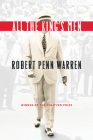
Wrong About All the King's Men

I've been wrong before about classic works of literature (like the Odyssey), but in my defense, this is what it says on the back of the book:
Robert Penn Warren's All the King's Men is generally considered the finest novel ever written on American politics. Set in the 1903s, this beloved book traces the rice and fall of Willie Start, who resembles the real-life Huey “Kingfish” Long of Louisiana. Stark begins his political career as an idealist man of the people but soon becomes corrupted by success.”

Let's start at the end of this summary. At the end of the book, Willie Stark's ultimate goal is to build a state-of-the-art hospital who's care would be free to all residents of Louisiana. He's willing to twist arms, use his influence, bribe, and blackmail whoever gets in his way to get it done. Previously, he's used questionable techniques to raise taxes on the owners of coal miners and land owners. Regardless of how he accomplished his goals, every single won of his goals was populist at the very least and quite often altruistic.

One might then argue that the corruption of the summary is evident in his methods, but he never once believed in the primacy of morally pure techniques in achieving goals. He is introduced into Louisiana state politics when he is asked to run in the Democrat gubernatorial primary, not because the askers actually wanted him to win, but in order to draw rural votes away from a different candidate. From then on he knows, as he later explains, “you've got to make the good out of the bad.”

But that makes it seem as though All the King's Men is about Willie Stark. Willie Stark is a dynamic force of action in the story of Jack Burden. The vast majority of the actual words that make up the novel are the observations, philosophies, emotions, memories, and thoughts of the narrator himself, Jack Burden. It is a story about becoming the person you are meant to be, finding yourself in relation the world and people around you, and confronting the questions posed by both the problems you face and how you face them. Big questions. Small moments. What could be considered the most tortured love story in American literature. And it's all told in a style not that far from Jack Kerouac or Hunter S. Thompson.

Early on, I was reminded of The Great Gatsby, and there is certainly some similarities between the relationships of Nick Caraway and Jay Gatsby and Jack Burden and Willie Stark. However, Caraway does his best to vanish into the story, projecting all of the tough questions onto Gatsby. But Burden confronts everything. Stark shows up, makes some things happen, and Burden processes all of the implications of the action. If this is a title to be proud of, Jack Burden might be American literature's greatest and most prolific brooder.

There are lots of different possible sources for an entire culture being completely wrong about a book it values. In this case, I think it comes back to America's obsession with action. Willie Stark is a character Dashiell Hammett or Raymond Chandler would write. He bangs on desks. He gives speeches. He does things. He is filmable. For more reasons than can be explored in a blog post, we've come to identify ourselves as doers. So even though the book has very little to do with, well, doing, we latch onto the doer and convince ourselves he is the hero.

Which is too bad, because Jack Burden is one of the most interesting and compelling characters in American literature. He doesn't always understand the people around him, but it's not for lack of trying. Furthermore, he has a commitment to thought, to understanding, that we rarely see in our pop culture. He left his career as a historian because he realized he could not understand the man whose story he was trying to tell. And without that understanding, every word he put down would have been a lie.

Near the climax of the book, Jack learns something that shakes him to the very core of his being. And in response he drives from Louisiana to California, stays in California for a few days and then drives back with a clearer mind. In doing so, he is aware of recreating the escaping American's journey, for since the colonizing of the land by Europeans, those of its citizens who have found themselves with no options in or understanding of their home have moved West. Over the course of those couple of weeks, Jack confronts things about himself and about the world around him that are beyond specific terminology. They are the experiences and feelings you cannot share with the rest of the world because the act of sharing them alters them so radically as to be rendered meaningless. If knowing thyself can be heroic, Jack Burden is a hero of it.

Of course, this whole business might come down to something even simpler. And what implications this has I shudder to draw. But the reason we might all be so wrong about All the King's Men is because it is called All the King's Men. We assume it's about Willie Stark, because is the king in the title. And though taken as a whole, the title tells you Willie Stark is the character this book is most likely to be least about, it's hard not to latch on to that key word. And though Jack Burden is many important things, he is not a king.

Thursday, February 16, 2012

If Every Game Were the All-Star Game

The NHL is approaching a crisis point. The more we learn about concussions, and the more mysterious concussions remain despite our increased knowledge, the more pressure is put on the NHL to find ways to keep players safe. And, since the Marc Savard hit, the NHL has been doing a respectable job at changing itself; adding new rules, fining and suspending players who break those rules, and, in general, raising the awareness of hits to the head. For what it's worth, the NHL, from the commissioner to the coaches, to the players have bought in to the idea of changing the NHL.

Still the NHL is approaching a crisis point. Sidney Crosby is out again. So is Nathan Horton, on a late blind-side hit to the head that somehow didn't get called in the game. There is a chance, as was argued in this Grantland article, that the tweaks and changes aren't going to be enough to keep players safe, that hockey, as it is played now, with the speed and strength of the players now, is just too dangerous.

At the moment, I believe there is still room for tweaks. I think changes to the equipment, not just helmets, but elbow pads and shoulder pads, can help. I also think there's more room to wiggle in how the penalties are called and punishments applied. Furthermore, I think there has been a change in the game. Players are now letting up on their hits. There are still big hits, but fewer of them behind the play, and, it seems, at least to me, that players are making an effort to ensure that the primary point of contact is not the head. Also, I do believe the players enter into a contract that, at least on some level, accepts the risks to their health for playing. There are others who might stretch that idea further than it should go, finding permission for all kinds of things because “players knew the risk,” but I think there is an element of truth to it that needs to be considered as a solution is sought.

The fundamental problem for the NHL is this; how long are they willing to risk another Marc Savard (or worse) while it tweaks the game? At the moment, the NHL is comfortable with that risk, but what if another career is ended before the league gets it perfect?

Which leads to the title of this post. What if every game were like the All-Star game? Because that is what the NHL will look like if it needs to fundamentally change the nature of the game in order to keep its players safe. What if the NHL formalized the gentlemen's agreement that keeps hitting out of the All-Star game? How bad would that actually be?

First of all, how many highlight reel hits actually happen in a game? One? Two? Three? I think I've seen a couple of games over the years where there were four or five, but never more than that. (Pretty sure those were Bruins vs Flyers games.) Because of how hockey is reported, the role of big hits in the game is radically amplified. Most of those hits are only possible when a player makes a mistake, and at the NHL level, players don't make many mistakes. A lot of people talk about preserving the culture of the game and protecting a key element of it, and though big hits are a part of the game and a big part what is entertaining about the game, they really only make up a tiny fraction of how the game is actually played.

Secondly, even with big hits removed, games aren't going to all be 12-9 shoot outs because they won't all be played by all-stars. Defensemen and goalies will get the chance to practice their craft because they won't always have Malkin and Datsuk, on the ice at the same time, or any of the forward combinations that skated in the game. Furthermore, it wasn't just the big hits that were cut out of the All-Star. It was the intensity of all the checks, of, well, everything but goal scoring. Grinding it out in the corners. Hip checks along the boards. Fighting for position in front of the net. Pretty much everything that makes hockey such a gritty, tough, entertaining game, would still be there.

Finally, would a change from 3-2 to 6-5 be that bad? Hockey fans on principle consider the All-Star game a boring cardboard cut out of the game, and they have a point, but I find it hard to believe none of them found at least some of the skating, shooting, and scoring entertaining. I didn't watch the whole thing (I work on Sundays and didn't realize NBC Sports was replaying it that night until far too late) but seeing Sequin skate unhindered was pretty exciting. In some ways, a dramatic rule change could make the game even faster, as players could blast through the neutral zone knowing no one is going to clean them out from the blind side. The best players in the league would still be the best players in the league; even the best defensemen because they make their mark more on positioning than hitting. Tough teams would still be tough teams. Ultimately, the game wouldn't look that different.

At the heart of this problem is entertainment. Hockey players would play hockey no matter what; but they can play it professionally, and be paid a lot to do so, because other people are entertained by watching the players play. If fans stayed away because of fighting, the NHL would get rid of fighting. For all the concerns people raise about the safety of the game, economically speaking, the NHL can't take actions that will drive fans away, because that would destroy itself. This isn't an apology or an excuse for the NHL to construct a dangerous game, so much as it is a challenge to fans of the NHL. If you only tune in for the one or two big hits in a game or only to see the fights, then you are missing the best parts of the game.

And, it is your responsibility to learn how to see more in the game. How do you learn to see the whole game? If you watch the Bruins, watch Patrice Bergeron. He might be the most complete player on the planet. Live in a different market; Pavel Datsuk is the next best thing. I'm a big fan of the St. Louis, Lecavilier, Stamkos line in Tampa as well, though they haven't been having a great year. Dustin Byfuglien's 200ft game is pretty good too. One last aspect of this point, before I start sounding too preachy; I'm not sure hits-and-fights-only fans really exist, at least not in enough numbers that their loss would end the NHL. Unfortunately, there might be only way one to know for sure.

(One more thing before you go, NHL Overtime Live is pretty damn close to the worst sports show on television. God, I turn it on every now and again to, you know, see what's been going on in the NHL, but Jeremy Roenick is a talking aneurism. And the other guy spends most of the show paraphrasing Jeremy Roenick. I mean, there must be somebody else out there. Steal someone from the CBC for godsake. Though, this is the network that tapped Mike Milbury, so...)

Thursday, February 9, 2012

Review of The Green River Killer


In some ways, the graphic novel is the perfect genre for crime writing. The artwork allows writers to highlight the atmosphere that is such a key part to crime writing and the visual presentation allows writers to cede the mechanical logistics of getting guns in hands and dames in cars—which tend to reveal weak writing skills—to the visual artists. The best comic crime writers, Ed Brubaker, Darwyn Cooke, Frank Miller (though this bastard doesn't get a link), are able to merge the best parts of each genre to create a totally unique and compelling product. Furthermore, comics allow crime writing to stretch its boundaries, as in Steven Niles Criminal Macabre series and John Layman's and Rob Guillory's Chew series. And, of course, one of our most important and powerful cultural creations is really graphic crime writing; Batman.

However, I'm not sure the advantages translate as directly for true crime writing as it does for crime fiction. There is a lurid kind of voyeurism to true crime writing, one that can be mitigated with a legitimate sense of anthropology, sociology, and psychology. Most read to see the blood and guts, and all are comforted that, regardless of the thrill, we could learn something about ourselves and the world from those blood and guts. But written descriptions of a corpse mutilated by a serial killer are very different from illustrations of a corpse mutilated by a serial killer. One of the reasons Art Spiegelman, decided to tell his father's story with mice and cats, was because the illustrations would have been too gruesome if they had been illustrated people.

The Green River Killer by Jeff Jensen doesn't seem to have figured out exactly what it wants to be. It opens with a brutal, but not gruesome, scene, one that we don't feel is over the top only because it is true, but all of the other brutality inherent in the story Jensen tells is muted. It feels more like an homage to his father, the detective who put, by far, the most hours into solving the string of murders in the Seattle area, and there is now doubt Detective Tom Jensen deserves the honor. But most of Jensens' work was data compilation; the absolutely indispensable police work at the core of all successful investigations, that always gets left out of crime fiction because it is so boring to watch.

Over 40 women, mostly prostitutes, were murdered and their bodies found near Green River in the Seattle area. For decades Jensen pursued hundreds of different leads for thousands of different suspects, pioneering the use of computers in detection. For most of it, they couldn't be sure whether it was all the work of one killer or whether there were copy cats. Eventually forensic technology caught up with their needs and they were able to get a DNA identification of one of their early suspects, a man named Gary Ridgeway. Eventually, Gary confessed to being the Green River Killer in order to plea bargain a life sentence from a death sentence.

Most of the story is of the interviews conducted with Ridgeway as he gave evidence of his murders. Flashbacks filled in details of the investigation and showed some of the effects of the work on Detective Jensen. Though the book has little to say about the greater questions of justice and law of life and of murder, it's clear why his son wanted to write an homage for him. Detective Jensen is one of those heroes whose unshakeable persistence and unquestionable decency is almost guaranteed to go unnoticed.

I'm sure there is a book in Detective Jensen's story, but it's not this one. In this world of data-overload, a book about how Detective Jensen pioneered and mastered computers in detecting might be the most important, and, if the writing is successful, the most entertaining version of his story. Someone interested in the Green River Killer story would likely appreciate the straight forward presentation of one of the major plot lines in those horrific events and connoisseurs of true crime might want it on their shelves. But for everyone else, it might be better to stick with Brubaker and Batman, and hope someone else taps the potential for the true crime graphic novel.

Thursday, February 2, 2012

Contemporary American Politics Explained in Two Campaign Ads

Everyone expected attack ads against Elizabeth Warren when she became the de facto Democrat nominee for the Senate race this fall. Given how she came to national attention by actually working to actually regulate banks, credit cards, and other financial products and industries (you know, the people who caused the 2008 economic collapse), and given how vocal and intense she was in the struggle to create a bureau that would effectively regulate those aspects of the economy, no one was surprised by this ad, paid for by Karl Rove's PAC.


The Warren campaign was expecting this. They were prepared for this. And when the ad first aired they probably all said to themselves something along the lines of, “OK, this is the fight we're going to have.” Sure it distorts the Occupy movement, and yes, it greatly exaggerates (but does accurately identify) Warren's association with the Occupy movement, and sure, it is fear mongering, and yes, it is trying to appeal to those of us still fighting the Cold War with the Soviet Union, but Warren is an actual liberal and that's how you attack liberals these days. It's histrionic, but its histrionics have been industry standard since Daisy counted down the bomb.

But then the exact same organization, Karl Rove's Crossroads GPS, like a month later, ran this ad (Warning: Watching these two ads consecutively may result in acute Brain-Splody syndrome):


A month ago Elizabeth Warren was the “Matriarch of Mayhem,” the philosophical godmother of the Occupy Wall Street movement. The next month she was too cozy and too supportive of Wall Street. And no, they're not ads against two different Democrat candidates for Senate that just both happen to be named “Elizabeth Warren,” they're attack ads against the same person. These are two mutually exclusive ideas and yet Crossroads GPS managed to hold them at the same time. (By the way, that's one of the definitions of insanity, but you didn't need me to tell you American politics is insane.) So what was different between the times when the first ad and second ad were run. This just fucking kills me. The Occupy Wall Street movement had succeeded in changing the national discourse to focus (if however briefly) on the crimes of Wall Street against the middle class.

And there you have contemporary American politics. Karl Rove wants Elizabeth Warren to lose. When he ran the first ad, the Occupy Wall Street wasn't polling well, so he exaggerated an association between Occupy Wall Street and Elizabeth Warren. When he ran the second ad, Occupy Wall Street was polling really well and the banks were not, so he just made shit up. It didn't matter that a month earlier he presented a mutually exclusive argument. It didn't matter that it was about the most ridiculous accusation you could level against Elizabeth Warren. (“Blood and teeth on the floor” doesn't sound too cozy to me.) It didn't matter that he completely and totally made shit up, as Warren was constantly fighting for more oversight of the banks AND, it didn't matter that in the course of 32 seconds the ad argued that there needed to be much more oversight over the bailout process and that we need a smaller government presence in the economy. (Your ears might also bleed. Probably should have added that to the warning. Maybe your eyes.)

The only thing that mattered is that, at the time, Crossroads GPS calculated that this particular representation of Elizabeth Warren would hurt her chances of winning the election regardless of what representation they decided on last month. If they do some polling in a couple of months that shows voters are particularly concerned about the well-being of polar bears, you'll see a Crossroads GPS ad that attacks Warren's lax attitude towards helping polar bears. If those poll numbers flip for some reason the next month, I'm sure we'll learn that polar bears have never had a better friend than Elizabeth Warren.

How do these two ads explain contemporary American politics; because they show politicians just don't give a shit; not just about facts, politicians have always had a, oh, let's say “complex” relationship with facts, but also about making a shred of fucking sense. Whole swaths of American politicians, pundits, and campaigners don't give a shit about anything...but winning.

And that pretty much explains everything that has gone on over the last four years or so. Hell, Mitch McConnell came right out and said it after Obama won the election that the Republican goal was not leading the country, but winning the Presidency in 2012. Right now, the only standard that politicians hold their statements to is whether they think those statements will help them win. Nothing else matters. If John Bolton thinks it will help a Republican win in 2012 he will say Obama's decision to lead from behind in Libya would result in a long drawn out civil war and then a month later when the rebels overthrow Gaddafi, he will say Obama should have slowed down the Libyan revolution in order to ensure a more stable transition, and he will say it, even though we have him on video him saying the exact opposite thing, and without even mentioning that he is arguing against himself. And the media will still interview him for his opinions even though his opinions are clearly shit.

But. There is something that could be called a sliver of hope. And that something is...Mitt Romney.

Or rather, it is Mitt Romney's inability to sow up the Republican nomination. The reason Republican voters are sampling all the other candidates and the reason Romney can't seem to grab a full majority of Republicans is simple. He will say whatever it takes to win the nomination and everybody knows it. And just about everybody is disgusted by it. This is why, despite being the only candidate even remotely capable of running this country, and despite the obviousness of that fact, he can't seal this deal. Who knows what will happen over the next few years and in the presidential campaign, but Romney's struggles are an indication that the public is approaching its bullshit limit. There is only so much say-anything-to-win the public will accept. Of course, that means that political strategists will just develop techniques so their candidates SEEM like they're not just saying anything to win, but there's a chance, a slim one, that some strategist will discover that the easiest and most efficient way to SEEM like a capable leader, is to actually be one.