Showing posts with label antifa. Show all posts

Friday, September 1, 2017

Thoughts on Antifa

There were a lot of antifa at the rally in Boston a couple of weekends ago. I saw them as I walked from the T station to the meeting place for the march to the Common, while walking through the march itself, and once we got to the Common and learned that the Nazis had left under police escort over an hour earlier. The debate around how those on the left (and, really, in the middle) should respond to the violence on the right and the inherent violence of white supremacy started long before Charlottesville. In it's current incarnation, it probably began with Richard Spencer getting punched and with the violent conflicts in Berkeley that started on February 1, 2017. But that debate was given a different significance and a different urgency when Nazis murdered Heather Heyer with a car in Charlottesville. Mentally preparing myself for what might happen if I met Nazis in Boston and seeing so many antifa in the crowd, galvanized my thinking about the debate. I haven't come to any ultimate moral clarity (if such a thing is possible) but I feel I at least have the issue organized a bit more in my own head and I hope that laying (some of) those organized thoughts out in a piece like this, will provide a base from which the conversation can continue in a way that doesn't weaken our collective resolve to fight Nazis. (More on that at the end.)

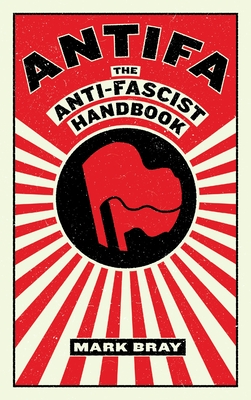
I also want to emphasize that these are just my thoughts, and though they come from some experience with activism and a life of political engagement, they are just my thoughts from my perspective. Furthermore, this isn't a broad consideration of antifa history, tactics, definitions, and goals. If you want a fuller explanation and exploration of antifa, pick up Mark Bray's excellent The Antifa Handbook at your local independent bookstore.

Antifa at Protests Makes Me Feel Safer
Whether it's a party or a protest, a large group of people in a relatively confined space has the potential for chaos and violence. Maybe it's someone in the crowd being a jerk, maybe it's a police officer overreacting, maybe it's an outside agitator being aggressive, but a peaceful protest can turn into a dangerous riot quickly. On our way to the rally, I was nervous because I expected a lot of marchers and counter-protesters would be relatively inexperienced, Maybe this was their first rally or their second rally after the Women's March or the Science Rally, or whatever. (For me, it had been well over a decade since I'd been to any protest or rally with the potential for conflict.) It is always great to welcome new people to activism, but there is a level of danger, when there are new people in, well, any activity. (I'm suddenly reminded of floor hockey in gym class.) With big crowds in volatile situations, sometimes inexperience can be just as dangerous as malice.

But antifa know what they're doing in crisis and confrontational moments in protests. They won't panic. They won't start running all over the place. They won't create a stampede. Knowing there would be a lot of people vastly more experienced with protests than I was, along with those who are newer, greatly reassured me.

Furthermore, had there been conflict, antifa would have born the brunt of it, allowing the rest of us to get away. Their tactics tend involve coordinated group movement and standing in place and they often attend rallies with the understanding or plan that they will get arrested at some point or at least engage on some level with either the Nazis or the police. This not only creates a physical barrier between elements of chaos and potential violence and those who are not prepared to engage with chaos and violence, it also creates an organizing principle. So, I knew that, if things got crazy and I no longer wanted to be engaged in whatever was happening, all I had to do was spot where the antifa were gathering and go away from them.

Whatever your ultimate decision about antifa and their tactics, they make protests and rallies safer for everyone else, even when they are not putting themselves between violent white supremacists and you. Furthermore, also remember that, whether you agree with their specific tactics or not, like those who sat at lunch counters during the Civil Rights movement and occupied factories during the Labor movement, antifa are choosing to risk their bodies so you don't have to.

Scale Matters
White Supremacy is a genocidal belief structure. Whether it is the overt genocide of the Holocaust or of the indigenous peoples of the Western Hemisphere or the reserved genocide of slavery in America (in which a white person always reserved the right to kill a black person even when he did not exercise that right), white supremacy believes in genocide. We forget that far less than a century ago, the KKK practiced ethnic cleansing through lynching and radical terrorism through violence and destruction. They hung people from trees. They beat them. They threatened them. They burned churches. They murdered allies who came down to help in the struggle for Civil Rights. Those extreme acts of violence are not a consequence of white supremacy, they are not an accident of white supremacy, they are not drawn from fanatical interpretations of white supremacy, they are not fringe white supremacy. They are white supremacy. In direct contrast, the violence of antifa, to date, has all been non-lethal and all been confined to direct conflicts with fascists who came to fight. Antifa have not gathered at Richard Spencer's house. They have not dragged David Duke through the streets. They have not burned down white supremacist churches. Do I really need to say that a street fight is different from a mob dragging a black man out of his house and lynching him?

Even the fake images and sensationalized reporting used to paint antifa as inherently violent essentially reveal the opposite when scale is considered. Take, for example, the images used after the Boston anti-white supremacy rally. One was of a man standing in formation holding a pole with a nail in it, an image actually from a protest in Dover, England. Another was of a young woman sitting down holding a sign that said “All My Heroes Kill Cops,” an image that is at least four years old. Or, to put this another way, after the images of a horde of torch-bearing (a clear reference to lynching) white supremacists attacking a small group of anti-racist protesters on the Friday night of Charlottesville, including hitting them with their torches, the violence of the radical left is supposedly proved by pictures of people just fucking standing there. Whatever the message of the images themselves, there is a difference in scale between hitting someone with a torch and just fucking standing there.

However, you feel about the violence around antifa, flattening the scale ultimately helps fascism by creating this false of idea of equal opposing forces. It allows you to say, “Sure, Republicans have an ideological connection to the KKK, but you could argue the Democrats have an ideological connection to antifa” as if that were in any way a balanced statement. I mean, let's try it this way: “Sure, Republicans have an ideological connection to Nazis, but Democrats have an ideological connection to people who fight Nazis.” Or, let's look at this issue using the current phrasing: Is it OK to punch a Nazi? When we reframe this question so scale is considered it becomes: Is it OK to cause brief physical discomfort with little (but not zero) risk of permanent harm to someone who believes they are allowed to kill Jews and people of color?

The Double-Standard
This flattening of scale contributes to the double-standard in our discourse that allows Republicans, conservatives, the radical right wing, and other reactionaries to get away with bad arguments and bad actions. Whenever anyone on the left goes too far (or anyone who can be convincingly associated with the left whether they're antifa, black bloc, or whatever) as seems to have happened in Berkeley more recently, it inherently threatens the entire legitimacy of whatever spectrum they can be associated with and yet somehow Republicans and Conservatives don't have to fear that same delegitimizing from Dylan Root, Cliven Bundy, or Richard Spencer. This double-standard is especially ironic given that there is a pretty straight line between small-government conservativism and Cliven Bundy's radical anti-government actions and between Nixon's Southern strategy and the overtly racist policies of the Reagan/Bush era and today's white supremacists and Neo-Nazis.

I think we can attribute part of this double-standard to the success of the myth of liberal bias. Because liberals and democrats have been inherently motivated to prove their lack of bias, they are much quicker to condemn and critique those on their side, whether those condemnations are warranted or not. For a recent example of the impact this drive has on policy look at deportations under Obama. In many ways, I'm sure he felt he had to “compensate” for the Dream Act so as not to appear, I don't know, too caring for the lives of the less fortunate or “too liberal,” so deportations increased dramatically during his administration. (Not that that changed Republican perceptions or arguments about him, but more on Republican argumentation later. Actually, more on Republican argumentation right now.)

I think the other part comes from the fact that much (if not all) of the right doesn't actually give a fuck about debate, dialog, argument, and consensus, and will say or do whatever it takes to achieve their policy goals. If they want to cut spending on the poor, they'll talk about being fiscally conservative. If they want to increase military spending, they'll talk about national security. If they want to cut taxes on the rich, they'll talk about simplifying the tax code. If they want to disenfranchise minority and other likely democratic voters, they'll talk about voter fraud. To put this another way, Republicans and conservatives only care about being in power and will make whatever argument they think will get them there, whereas Democrats and liberals have at least some commitment to a coherent worldview and are thus limited in what they can argue and assert by, you know, responding to the actual world. This raises an important question for those who argue that dialog and discourse are the only legitimate way to engage with contemporary white supremacy: what evidence do you have that the right, let alone the radical right, actually cares about dialog and discourse?

When you gang up on someone and kick them when they are down, that is assault, not self-defense, whether you're wearing all black or festooned in white supremacy symbols, but, again, when we compare violent acts against violent acts a difference in scale is obvious. In Charlottesville, four white men (some with sticks or poles) beat one black man in a police parking garage for minutes, badly bloodying him. In Berkeley most recently, we saw three-to-five men swinging their fists at one man on the ground and a much larger group, some with shields and maybe a few other weapons, pushing two Trump supporters (one of which might have used pepper spray first) out of the street and knocking them down, with one man (not the one with the pepper spray) getting kicked while he was down. From the best that I can tell from the reporting, neither resulted in any significant injury. And, unlike Charlottesville, they were aberrations during an otherwise peaceful protest (you know, according to the guy who filmed one of them) that was intentionally distorted by those on the right and sensationalized by the mainstream media because, well, that's what the mainstream media does. Both absolutely constitute assault, but assault on a different scale than was committed by the white supremacists. Furthermore, quoting from the Los Angeles Times:

“Police, and in some cases other counter-protesters, stepped in to halt the violence or escort the victims away from the area.“

Unlike in Charlottesville, both on Friday and on Saturday, other people, including those on the left, stepped in to stop the violence. Where were those “very fine people” people on the right in Charlottesville? (When antifa cross the line other antifa stop them. When fascists cross the line, antifa stop them.) But once again, the “antifa are just as bad” has gained new traction, because the left is held responsible for giving the right anything to distort, while the right is not held responsible for their distortions.

To put this another way, the liberal resistance must be perfect in all of its actions and any flaws or mistakes are seen as fundamental expressions of the failings of the ideology itself or reasons to undercut it from the middle, while the conservative, right wing resistance to President Obama was allowed to lynch him in effigy, lie about his birth certificate, and attribute all kinds of horrible flaws to him without any justification, shatter longstanding Senate norms, without delegitimizing conservative and Republican ideology. Antifa must be perfect in their ideas and actions in order to be legitimate, while Republicans can fuck up all the time, have Dylan Roots, Cliven Bundys, and Timothy McVeighs swimming around on their fringes and suffer no consequences in terms of the debate or policy whatsoever.

How Many More Traumatized Bodies Do You Need to See?
One the tenets of the nonviolent civil disobedience is that, the violent response of police to people walking on a bridge or sitting at a lunch counter reveals the violence inherent in the system to those who would not otherwise see it. Furthermore, the images of those traumatized bodies have an emotional impact on those who otherwise don't feel they have something at stake in the conflict. (Though, Sontag at least thinks it's a bit more complicated than that.) For the modern Civil Rights movement, I think there is clear evidence that those images of traumatized bodies helped shift mainstream public opinion in favor of civil rights and away from racist and segregationist polices. (Others might argue that the nonviolence would not have been effective on its own and that the various race riots and other violence or threats of violence played at the very least a supporting role, but I don't know nearly enough about the subject to comment.) Even more recently, the Black Lives Matter movement was greatly strengthened by the dissemination of images and videos of traumatized black bodies.

It is true, that images convey emotional impact, and it is true that our ability to quickly share images influences policy debates, but, at the same time, what would we have actually learned about violence, whose mind would have actually been changed, what more just policy could have come about if Cornell West got the shit beat out of him? How many more traumatized black bodies do we need to see to know that the KKK is bad? Do you have the right to demand other people take a beating to preserve our own sense of moral purity?

So Much More to be Said & Nothing More to Be Said
I've left a lot out of this post, even of my own thoughts. There is a ton of historic context around radical left wing activism, radical right wing terrorism, the codifying of racism in American policy, and the authoritarian tendencies in the Republican party. There are arguments around how we would perceive American white supremacists and fascists if they were foreigners, around the tension between protecting lives now while continuing to lay groundwork for more lasting progress, and around the nuance of particular weapons and particular physical acts. I also haven't spent any time on the idea that there is no antifa when there is no imminent threat of fascism and that the easiest way to get rid of antifa is to show up at counter-protests yourself and vote Democrat in the next few elections.

I honestly, despite all the above words, still don't know exactly what I believe the ultimate ethics are of antifa as a tactic. I think ganging up on someone and kicking them when they're down is wrong. (Pretty sure most antifa think that as well.) I also think, personally, as a white dude, if I'm in a situation in which a Nazi is attacking a person of color, I have a responsibility to intervene and in some way put my body between the Nazi and whoever he is attacking and what happens after that, I don't know. 

But despite all the nuance, despite all the disagreement, despite the different ethical frameworks, we all agree that every human life has value and that, though we need to continue to have these debates about the methods of the resistance, both as effective tactics and as moral acts, we cannot let those debates drive us apart. We cannot let our front be divided, we cannot let Nazis slip through the cracks back into open society, and we cannot let this president, his family, and the Republican party use white supremacy or anything else to turn this country towards fascism. And even if you believe all violence is wrong, even if you believe antifa are hurting the fight against white supremacy and fascism in America, even if those black masks and organized young people scare you, remember there is one absolute unquenstionable difference between antifa and Nazis. Nazis are Nazis, while antifa are people who fight Nazis. Remember what you call the people who fought Nazis the first time around?

Like my work? Support me on Patreon.

Wednesday, August 23, 2017

Triumph in Boston: Thoughts on the Rally Against White Supremacy

Triumph
Saturday's counter-protest (including the march and the rally that started at the Common) was an absolute, unequivocal, unqualified victory against racism and fascism. The numbers were staggering. And, it's important to note, a lot of college students, who swell the city's population during the school year and tend to be more liberal, weren't back in the city yet. The image was unambiguous: 30-40,000 counter-protests to 40-50 huddling in the bandstand despite the several hundred foot buffer the Boston police gave them in the surrounding area. (2017's relentless effort to produce metaphors of itself continued when a small group of loud-mouthed overconfident men were granted vastly more land in proportion to their population than a much larger more diverse group.) In fact, they packed up before most of us even got there. It took us two and a half hours to march about two miles from the Reggie Lewis Center to the Common and by the time we got there, the Nazis were long gone, having been escorted out for their own safety in police vehicles. It had to be humiliating and discouraging.

Perhaps even more importantly, early on the organizers tried to distance themselves from the Nazis at Charlottesville. Over and over again (because the media kept talking to them) the organizers pretended this was about “free speech” and that most of the speakers had at the very least ties to or demonstrated sympathies to white supremacy and white supremacist organizations was just, you know, a coincidence. Furthermore, unlike the “free speech” rally in Charlottesville, from the pictures I saw, the attendees in Boston didn't bring any overt symbols of white supremacy. I later learned that organizers actively discouraged attendees from bring such symbols. Furthermore, there had been statements earlier in the week that members of the KKK in Massachusetts were going to attend, but, as with the other symbols, if they did, they were too scared or too ashamed to show themselves. That, of course, is the point of these counterprotests. There is absolutely no redeeming value to white supremacy and anyone who harbors any shred of it in their souls should be too ashamed of themselves or afraid of the consequences to display it in public. And it looks like, at least to some degree it worked.  (Just going to pause here and throw in a “Fuck yeah, Boston!”)

But the biggest long-term victory came in the form of scare quotes. We are in this place right now, in large part because of how successful the radical right has been of controlling the media narrative. Whether it's the early framing of Trump's electoral college victory as rooted in “economic anxiety” or the long term myth of the liberal media, much of the responsibility for the destruction now being wrought by the Trump administration lays squarely with the media who kowtowed for decades to intimidation and manipulation on the right. But on Saturday, they began referring to the white supremacist rally as a “free speech” rally. Those scare quotes are short hand for “so-called.” For months and months (maybe years and years) white supremacists and fascists have been using the rhetorical technique of throwing the debate away from their reprehensible opinions to the nuance of free expression and, in doing so, have been able to continue to create platforms for recruitment and radicalization. But, by Saturday, the mainstream media were no longer having it. The media did not give them the benefit of the doubt. If the right wants to hold another “free speech” rally, rather than the left having to prove it is a thinly veiled white supremacy rally, the right will have to prove it's not. That is a huge victory, and as the Trump administration continues to unravel (and as Trump himself continues to unravel) inherent skepticism from the main mainstream media of right wing rallies, protests, and responses to the Mueller investigation or articles of impeachment or the 25th amendment or even specific steps by cities, states, and NGOs to counter the white supremacist policies coming out of the justice department, will go a long way in the helping the struggle.

Radical Fire
One of my first observations, as I walked from Roxbury Crossing towards the Reggie Lewis Center and while I thought back to the list of speakers at both rallies, was just how much more radical the organizers of these counter-protests were than many of the attendees. Along with antifa (more about them in another post), the place was just lousy with socialists, prison reform and abolition activists, indigenous rights activists, and Black Lives Matter activists. The speakers before the march itself were spitting fire that I doubt a lot of the attendees had heard before.

But that is, of course, how movements always start and how movements are always sustained. As much as moderates and mainstreamers like to argue for incremental change and cautious reform, almost none of those changes or those reforms would happen without the engine of radicalism organizing and fighting for so much more. The status quo only changes through immense force (whether activist, technological advance, or other) and immense force generally doesn't start with moderates. I mean, it is telling that Black Lives Matter and various Socialist organizations and not, say, the Democratic National Committee organized a protest against Nazis. But there were certainly, plenty of Democrats in the crowd.

I like to think of it as a pot of boiling water. The change that bubbles to the surface, whatever form it takes, is fueled by the radical fire on the bottom. Whether it's overtime pay, weekends, clean air, free public education, curb cuts in sidewalks, Social Security, or any other now obvious reform that makes your life better, you can thank the radicals of our past for fighting against the status quo and putting their jobs, bodies, even lives on the line for what they believed in.

Because, when you really start to drill down into what radicals on the left fight for, and what more moderate people believe is just and good for the world, the difference isn't really so great. As one of the socialist speakers put it, sure there might be differences in specific policy, there might be disagreements over nuances of theory, but when you're fighting Nazis you want to present the widest possible front. So when you start asking (or repeating) questions about socialism, Black Lives Matter, prison abolition, reparations, guaranteed minimum income or any other policy or idea that is considered “radical” I urge you to take a few minutes and research the roots and reasons for it. Is the idea of reparations today any more radical to us than the idea of the weekend was when it first proposed? Is the idea of a guaranteed minimum income really that radically different from Social Security or welfare? It is amazing how many policies you can agree on and how much change you can enact when you realize we're all starting from the idea that all human beings are valuable.

Why Boston Was Safe
When I was talking to people before the march, I told them I was 83% certain it was going to be perfectly safe. Not the strongest percentage when we're talking about physical safety, but still, pretty safe. And the reasons for my assessment were born out.

First and foremost, these men are cowards. They are perfectly happy to bang their shields and swing their sticks and shout their nonsense and attack people when they have such a numerical advantage that not a single one of them assumes any meaningful risk of harm. But, despite how vital the First Amendment is to freedom or whatever, not a single one of them was brave enough to stand within a hundred feet of the crowd of protesters and make their case. Now, I'm not saying their fear was unreasonable, but I am saying that Nazis are cowards and that, from what I saw, not a single white supremacist in Boston on Saturday displayed a fraction of the courage showed by UVA students and counter-protesters in Charlottesville. I want you to really internalize this point and think about what it means, especially when I discuss antifa later: when the left outnumbers the right in contentious and confrontational rallies, said rallies are much more likely to be safe. If the numbers are roughly even (as in Berkley and Charlottesville on the Saturday) or if there are more white supremacists (as in Charlottesville on the Friday night) there is a much greater chance of violence. That it was about 400 counter-protesters to every white supremacist meant that there was no meaningful risk of harm.

Second, every year Boston hosts at least two events that require managing tens of thousands of people: the Boston Marathon and the Fourth of July, so the city and the police force have long institutional knowledge for dealing with crowds. As boring as it might be, crowd control logistics play a big part in whether or not protests are safe. Where you put barriers, how far apart they are, how many officers you have and where you put them, are all boring, technical details that can have huge impacts on whether or not a protest is safe. You can see the value of police experience with logistics because of the stark contrast between Boston on Saturday and Phoenix on Tuesday. If I'm being very generous, I suspect the sudden use of tear gas, pepper spray, pepper balls, and flash-bang grenades by the Phoenix police came from the goal of keeping the counter-protesters and the Trump rally attendees separate, but the police were simply not prepared. I'm sure many of them will believe that tear-gassing a crowd of ten thousand plus peaceful protesters who had been standing in the heat for hours and hours was the safest option, but, they were either totally unprepared or totally unwilling to actively manage the crowd exiting the rally. Their lack of crowd control experience created an extremely dangerous situation and we are very lucky no one was seriously hurt either directly by the police (all of those "non-lethal" weapons can be very dangerous to the elderly, the very young, and people with specific conditions like asthma or allergies to any of the ingredients in the chemical weapons) or in the chaos created when tear gas suddenly shows up and thousands of people start running. (My less generous interpretation is that the same thing happens whenever tear gas is deployed. A few things were thrown at police in body armor, helmets, and riot shields, so they overreacted.)

But, on the police side, at least as importantly was that it was made clear, at least from my interpretation, that the police were willing to arrest the white supremacists as well. It matters that the white supremacists were told they were not welcome. I know it sounds weird to say that committed to arresting people who commit crimes was important, but Charlottesville got so dangerous because the police did not intervene in situations when the white supremacists were assaulting people. We don't know what would have happened if violence had erupted, if the Boston police force would have stuck to their statement and arrested people on both sides or if they would have done what police departments usually do and just arrest the nearest black person to the incident, but the fact that they gave that impression was important.

Finally, Massachusetts has strict gun control and prohibits open-carry. I don't care what you say about the Second Amendment, carrying a fucking assault rifle in a public place in general, and to a protest specifically, is a fucking threat. It is a confrontation. It is a tactical act of intimidation. It is an assault on free speech. It is an act of violence. Furthermore, we know whose side the men playing soldier are on. As overwhelming numbers bolster Nazi confidence for violence, so does knowing they essentially have a militia armed to the fucking teeth ready to step in and “act as peacekeepers” or “protect free speech” if it looks like those who oppose white supremacy might have the upper hand. Furthermore, just at an emotional and psychological level, a bunch of dudes walking around with fucking assault rifles inherently raises the stress level, and thus greatly raises the odds that adrenaline overrides clear thinking. Which means that perhaps the easiest way for cities to prevent violence, at all significant levels, at their protests is to ban open carry at them. Because, as has been pointed out elsewhere, the First Amendment (you know, what this is supposedly all about) has no meaning when the Second Amendment is given free rein.

Final Takeaway: Saturday Kicked Ass But This is Far from Over
There are a few images that will stick in my mind from Saturday's march. The “Ruck Neo-Nazis” sign from the Rugby Players Against Racism group. The live-action demonstration of intersectionality as, along with the more generic condemnations of racism and white supremacy, there were signs for Black Lives Matter, refugee rights, immigrant rights, prison reform, LGBTQ rights, and dozens of other groups and ideas threatened by white supremacy. People swing dancing in the empty street to the music from the marching band. The number of Porter Square Books customers I saw in the crowd. (Good job, team!) The strange energy when we finally got to the Common and thousands of people who had geared themselves up to drive Nazis from their fucking city found themselves with beautiful free Saturday afternoon in Boston. But the image that hit me the hardest was a middle-aged to older black woman, who had climbed up the side of a dumpster to get a better view, filming the march with her phone, saying over and over again, “Thank you. Thank you all.”

But it's important to note: white supremacy is the idea that white people have the right to do whatever the fuck they want. This fight is far from over. And though they may not use “free speech” rallies as a cover for recruitment events going forward, the most radical and most dangerous of them will certainly apply lessons from Saturday. There were reports of people taking pictures of DSA women to dox them later. I definitely saw two white men, walking perpendicular through the march filming people. Maybe they were innocently documenting a historic event, but I got a weird vibe from them, and it is just as likely they were recording the faces of the “enemy.” White supremacists see themselves in a war and they will take the lessons of this defeat and apply them to their next actions. Furthermore, because of the white supremacists in the federal government, like Jeff Sessions, our resources for fighting this specific kind of terrorism are being greatly curtailed. I am so lifted up from Saturday's march, but I am also profoundly afraid at what will happen next.

Boston is a weird place. Despite being the cradle of the abolitionist movement, it is still profoundly racist. And whether that racism reflects itself in busing policy, gentrification, school funding, or the n-word, it is still something we will struggle with. But Boston made a statement on Saturday: white supremacy is not welcome here. Maybe it wasn't the bravest statement. Maybe it wasn't the most enlightening statement. Maybe there can be further discussion about how to make these statements. But it was an absolutely necessary statement and because Boston made it, it will be easier for other cities (like Phoenix) and other places to make their own version of it.

Like my work? Support me on Patreon.

P.S. There were a ton of antifa at the counter-protest on Saturday and seeing them helped galvanize my thinking about antifa. Look for those thoughts later this week or next week.