Wednesday, June 28, 2017

Buses & IDs: A Different Strategy for Democrats in 2018

I tend to believe the idea of Democrats as weak, disorganized, unstructured, plagued with infighting, etc., is an idea that comes more from how we cover the horse race of politics and how successful Republicans are at framing discourse than any actual weakness, disorganization, infighting, etc., that exists within the party. To put this another way, respect for nuanced debate and difference of opinion within a shared goal or identity can look like all of those things when compared to an authoritarian party that sets much of the public conversation through ruthless repetition of bullshit while pundits, journalists, other media professionals, and many other Americans try to find a different answer for the success of terrible Republican policies besides “America is racist.” Which is not to say that the Democrats are perfect or always have good strategies. I, for one, attribute an amount of Obama's success in 2008, and specifically the success of his coattails in bringing other Democrats along with him to Howard Dean's fifty-state strategy and that the hyper focus on specific districts was part of why Democrats lost Obama voters to Trump in 2016.

I think the Democrat strategy for 2018 is still very much taking shape and it is still early to have fully synthesized the results of this recent round of special elections into a coherent strategy, but I have one idea that I haven't seen floating anywhere else that I think will help them break gerrymandered districts, mitigate the impact of voter suppression, and at least flip the House and perhaps even take the Senate.

That idea: Charter buses and shuttles to run from college campuses and minority community centers to the correct polling locations on election day and assume the costs of getting whatever ID is required to vote in whatever state for those who cannot afford it. Elections, it seems, have become a turnout a game one way to get likely Democrat voters to turn out is get them registered and drive them to the polls.

There is some argument that Democrats should continue to reach out to moderate Republican voters, that there is something active Democrats can do that will pull back voters who switched from Obama to Trump or capture centrists and moderates who sat out 2016, that a series of measured and moderate policies and messages will capture those moderate Republicans who are put off by some of what's happening in their party. It's an idea that sounds reasonable. That said, if Trump admitting to serial sexual assault, flaunting the norms around conflict of interest, golfing every fucking weekend, pathologically lying about everything, inadvertently or intentionally leaking state secrets and intelligence, all while being under investigation for what would be the single greatest political crime in our nation's history won't convince a “moderate” Republican to defect for an election cycle or two, what “centrist” policy would? Trump is doing damage that will take decades to undo if it can ever be undone. Why would we have to make any other argument to convince someone to abandon the Republican party at this point?

And it's not like Congressional Republicans have acted much better. For reasons I still don't understand, they have rushed and rubber-stamped every single one of Trump's atrocious nominees for cabinet positions, while dragging their feet (at best) on the Russia investigation. They are also, again for reasons I simply cannot understand, rushing to pass objectively disastrous and historically unpopular legislation. If the Senate bill manages to pass and Trumpcare becomes law, sure, you'll probably want to run a bunch of ads in every district about it, but, again, if the past sixish months haven't convinced Republicans to defect, some kind of middle ground economic policy isn't going to do it.

The lesson from Georgia is simple: All that matters to a critical mass of Republicans is that they vote Republican. In Georgia-6, Republicans had a significant registration advantage, one created intentionally to guarantee a Republican victory, and, despite everything else, Republicans showed up and voted for the Republican. Maybe I'm must being cynical, but I suspect, unless actual collusion between Putin and the Trump campaign is proved at a criminal court level and Republican Congressional complicity is proved at a criminal court level (and even then), Republicans will show up in 2018 and vote Republican. And when they do, the current gerrymandered, small state preferring, and voter suppressed system will deliver them victories.

And so, instead of spending money on ads that attempt to reach out to disaffected Republican voters, instead of developing a platform that tries to lure them into the Democrat fold for a cycle or two, Democrats, at a national party level, should leverage their Super PAC money, partner with existing voter rights organizations or build their own, and foot the bill for driving college students and minority voters back and forth to the polls while helping people surmount the barriers to voting tactically built by Republicans to suppress likely Democratic voters. (I'm a bit of a radical, but I'd go so far as to say if someone has the desire and means to move from a safe blue district to a swing district for a year, these organizations should help them sort out their registration and transportation as well.)

One might argue that Republicans would turn around and accuse Democrats of packing the polls, of voter fraud, of all sorts of electoral malfeasance. Which is true. Republicans would lose their minds over this. They'd try and pass legislation to stop it. They might even file lawsuits. They'd spend hundreds of hours on Fox News talking about how George Soros is stealing the election. My response: THEY ALREADY FUCKING DO THAT SHIT. FUCK 'EM. Republicans already accuse Democrats of everything they can think of and all without any proof whatsoever, all so they can pass legislation that gives then a major turnout advantage. Remember those thousands of voters who were supposedly bused into New Hampshire from Massachusetts? Of course not, because they don't exist. Frankly, (and this is probably why the Democratic National Committee isn't going to hire me any time soon) I don't give a fuck what Republican party leaders, pundits, and members of Congress say or think about anything because (and this is a fact I haven't seen discussed enough) they sure as shit don't give a fuck what anybody else thinks. They lied about WMDs in Iraq, they lied about Obamacare (and Republican leadership didn't do a whole lot to quell the birther nonsense), they lied and continue to lie about voter fraud, they broke the Senate and then lied about breaking the Senate, and if the Democrats do bus likely Democrat voters to the polls and do defray the cost of Republican voter suppression tactics Republicans will lie about that too, and if Democrats don't do anything to increase their turnout in 2018 the Republicans will lie about that too, because, and I can't stress this enough, at the party level Republicans don't give a fuck about anything other than electing Republicans.

I, like many Americans, believe our nation is stronger when there is political debate, when we discuss the actual policies affecting Americans, when all sides of the debate share the common goal of making America a better place, and when voters can switch allegiance from time to time as the political landscape changes, and I, like many Americans, also know there aren't any angels in politics, that at best we have people with good intentions trying to solve impossible problems, that Democrats make mistakes, that Democrats listen to their donors, that good policy can come from compromise, and that it is important to find some level of consensus for major policy changes, but Democrats didn't spew shit about death panels, Democrats didn't clog up the Senate with filibusters, Democrats didn't steal a Supreme Court seat for a serial sexual assaulter who publicly mocked a disabled journalist, and Democrats aren't covering up America's greatest scandal, so if we can't have debate, then I believe our nation is stronger when it is not run by white supremacist kleptocrats. And I think one way to boot Trump out of power is to bus college students and minority voters to the polls and pay for otherwise prohibitive voter IDs.

Wednesday, June 14, 2017

Reading is Resistance: Bloomsday

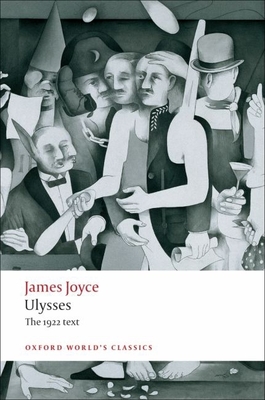
As Bloomsday approaches, and as our reality continues to resemble the first draft of a Pynchon novel, and as the torrent of events coming from the Trump administration establishes a permanent colony in my brain so that it's nearly impossible to go through a day without some half-yelling conversation with my partner about these fucking guys, I've started thinking about the nature of politics in Ulysses. Like just about every topic in Ulysses, the more one begins to think about it, the more one finds. There is, of course, The Citizen spouting off, and rumblings of potential city council or mayoral elections. Characters revisit one of the great political scandals in Irish history and the viceregal cavalcade winds through the streets of Dublin and through the events in the book as a reminder of the constant presence of a distant power. There's also plenty of identity politics as well, as Leopold Bloom, a non-practicing Jew, navigates his relationship with the Irish nation.

And, like all great books, if you put effort into the project you can find a way to make the politics in Ulysses relevant to our experience today. Though, there is no election or slide from democracy to fascism happening in the book, it is clear we are also watching a long standing (and undecided) conversation about what kind of nation Ireland should be, not just in terms of home rule or British rule, but also, like us, about what it means to be Irish, what it means to live in Ireland, and what it means to consider yourself a citizen of Ireland.

But when I think about politics and Ulysses through the lens of resistance and our personal relationship to resistance, I think less of the grander architectures and political landscapes of the book and more about one character: Leopold Bloom. Some of Bloom's political moments are overt, as when he debates The Citizen about what it means to be a member of a nation, while others are more policy specific as when he proposes a tram to move cattle so herds no longer disrupt traffic and when he recommends the government put a small amount of money in the bank for every child so that, as interest accrues on that deposit, every person has a financial safety net, while still others, like his acceptance and support of Molly's sexuality, we would see as overtly political even though Bloom (and perhaps Joyce) would not. Finally, other events and scenes in the book illuminate two other traits that seem to drive Bloom's political opinions; his curiosity and his imagination. Often, the reforms he offers in the course of his day start with him asking a question, and follow from him imagining an answer.

It isn't terribly original to describe Bloom as a reformer. Both the specific policies mentioned above Bloom offered in response to encountering a specific problem, I've talked about his drive to reform elsewhere and, though my memory is failing me at this point, he or another character might describe him as such. But our political moment is one of resistance, not reform. It is an existential struggle for a particular type of American nation, and it is a conflict with massive repercussions both in the short term and in the long term. But we can still draw from the core of Bloom's (and perhaps Joyce's) political beliefs and his motivations for reform.

Even in his wildest fantasies, in Circe, when he is able to enact a kind of hallucinatory wish-fulfillment, he doesn't imagine conquering other nations or accruing vast amounts of wealth or wielding god-like ultimately powers, but, essentially, of becoming a kind of uber-Robert Moses minus the malignant elitism that stained Moses' achievements, instituting vast social, technological, and economic reforms that would greatly improve the living conditions and lives of all those under his purview. Sure, it's foolish, filled with impossible technology, short on meaningful details, and, well, in a scene with gender swapping, S&M, and talking furniture, but ultimately it expresses a deep and profound desire, one that is (well I wanted to say “shockingly” but what shocks us anymore, so...) distressingly rejected by significant currents in our contemporary politics; to help every human being as much as possible. For Bloom, the goal of, well, everything, including government, isn't the preservation and elevation of a nation or nationality or even an ideal, but the preservation and elevation of people.

Furthermore, Bloom does two other things that illuminate his values. First, he checks on Mina Purefoy at the hospital because he heard she is going through a particularly difficult birth. Second, he follows Stephen, who is visibly drunk, into Night Town. These two big events, along with a series of smaller moments throughout the book, display Bloom's compassion. He is not a saint, he is not perfect, he has his flaws, and he makes his mistakes, but ultimately, Bloom is sensitive to the lives of those around him. He wants to ease the suffering of those who suffer and improve the lives of everyone.

What brings all of this together, what defines Bloom both as a human being and as a political actor, what makes him heroic and what makes him a role model for our own times and our own resistance, is the combination of three fundamental principles; curiosity, imagination, and compassion. For a famously difficult, confusing, and oblique book, Ulysses seems pretty direct in terms of how it thinks we should interact with our politics; a set of values that can easily be transferred from the politics of reform, to the politics of resistance. Perhaps that is universal and the distance between those two political acts is not nearly as far as I first thought. But it also could be specific to our political moment; there is a way to understand Bloom's values beyond politics, as core attitudes, or behaviors for being a decent human being and when the regime in power is so virulently anti-humanist, being a decent human being is an act of resistance in itself.

So, what does Bloom the reformer teach us in the resistance: Seek to know more than you know now, look beyond what has been done to discover what can be done, and do what you can to make the lives of others better.

Want to here me blathering some more about Ulysses? I'll be at Sherman's in Portland on Bloomsday.

Thursday, May 18, 2017

Reading is Resistance: Culture as Weapon

I'm going to say something and it is going to feel like pustulent garbage under a hot plate when it hits your brain, but it is true. Are ye brain-stuffs girded? OK. Here goes. Bill O'Reilly, of accused of serial sexual harassment fame, is the most important public intellectual in America of the last twenty or thirty years.

Deep breath.

OK. It is now clear that, as much as we want to blame it on things the kids use like Twitter, Fox News is a primary driving force in the polarizing of American politics and that it has radicalized almost an entire generation of white men. Fox's use of the myth of liberal bias in the media to relentlessly and dishonestly present a particular narrative is a big reason why we elected Donald Trump. Could Fox News have pulled off this twenty-year grift without the veneer of decency cast by O'Reilly? Could they have maintained the necessary attention to indoctrinate (or at least manipulate) without O'Reilly's skills in communication? Could anyone have transferred the vein-popping bluster of conservative talk radio to television better than O'Reilly?

And it's clear that O'Reilly is an extremely talented communicator. From his now cliché use of “folks,” to the direct and simple graphics, to overall delivery and body language, he was able to affect the codes of your white uncle who's really into politics, who will give it to you straight and who (courageously, of course) doesn't care who he might offend in the process. I am certain that, over the years, many people came to feel almost as though O'Reilly was their politics savvy uncle Bill and looked forward to checking in with him every day to see what he thought about what went on. (I'm tempted to describe him as the anti-Mister Rogers.) To put this another way, he used a persona (who knows how far it is from his real personality) to make coded racism, class warfare against the poor, Republican talking points, and alternative realities, emotionally compelling. When presented through O'Reilly's techniques, his ideas and opinions felt right and felt good, especially when they leveraged existing fears and biases. It would probably be a step too far to say that Bill O'Reilly is an artist, but he certainly used many of the techniques of the artist to build connections in our brain between certain emotions and ideas, policies, and (most importantly) other public figures. Obviously, O'Reilly himself would bristle at the label “public intellectual” but ultimately, given that until his recent ouster for serial sexual harassment, he discussed, analyzed, and presented ideas in public for money, he is (regardless of how bad his ideas are) the definition of a “public intellectual.”

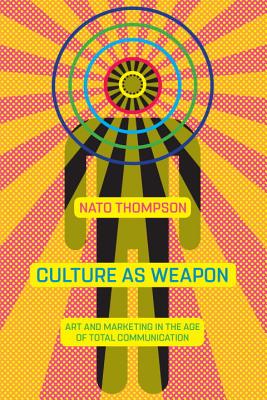
Nato Thompson's brilliant new book, Culture as Weapon: The Art of Influence in Everyday Life , has a simple thesis; culture—art, communication, social relationships—is really a set of tools that can be used by anyone for any purpose. What makes us enjoy a painting or a song or a story or a public park can be used to sell us crap we don't need, make us loyal to corporations, and even get us to vote against our interests. This use of culture for purposes other than enriching our lives is most obvious in advertising and public relations, but it goes deeper than that to corporate strategies, store design, and, even though Thompson doesn't take it in this direction, the Republican use of tribal identity and community to keep voters Republican policies historically harm voting Republican.

For the most part, this book is a starting point, with Thompson setting the stage and proving his thesis (you should see my copy, I must have tagged over a hundred of Thompson's points, phrases, and ideas) and leaving it to readers and activists to explore and apply his conclusions. Perhaps the most troubling aspect of Thompson's ideas, and why they are so relevant today is that, from the Dada rejection of sense in response to Europe's disastrous decay to the community building of the Civil Rights Movement to the leveraging of social media messaging by Black Lives Matter, culture is usually used to oppose unjust powers in service to a commitment to a greater humanity. If culture can be used by the wealthiest corporations and the already powerful and unjust governments, if Pepsi feels like it has the right to use images of protest, how exactly are we supposed to use art and culture to fight today? If an earnest attempt to imbue humanity and justice in our systems of government through image, story, and community can be turned into an ad, are those attempts and are those techniques effective anymore? If part of the fundamental argument of culture and creation is the value of all human beings, how do you use it to influence people who clearly do not believe all humans are valuable? How do you fight a reality TV star?

I don't have a good answer to those questions, but there is something of a silver lining here. We are exploitable because we seek connections, because we strive for empathy, because we want to help, because we want to provide for our families, because we want strong communities. So much of how we are exploited through cultural weapons are based in the angels of our better nature. On the one hand, it makes us easy targets; just slap the label “family values” on yourself and you get almost free rein for hate and bigotry, but on the other hand, it also proves we have those angels, that even if we disagree on the process, we all want the same things. In a strange way, the most shortsighted, cynical, greedy systems of research and production have, in a way, proved the existence of our core of human decency.

Furthermore, I think it is important to point out that there is probably a reason why most artists, intellectuals, professors, creators of culture, tend to be humanist (or at least aspire to humanism even if they often fall short), to create works that inspire and empower, rather than items that compel consumption or leverage fear of the other for personal gain. Yes, there are plenty of talented, brilliant, content creators, embedding GEICO slogans into our brains and creating talking points for fascism, as there were always plenty of talented, brilliant artists willing to paint Jesus a thousand different ways for popes and cardinals, but still. There's a reason why the Right hates Hollywood. There's a reason why Evangelicals hate artists and creative expression. There is a reason why Conservatives are afraid of higher education. This is not to sanctify artists and intellectuals, but to argue that there is at least some historical, statistical implication, that engaging in the creation of culture has a close relationship with wanting to make the world a better place for everyone.

But there is still a gap between this idea and actions we can take today. On the one hand, it seems to imply the possibility of reaching out and across and finding those better angels in the people who put Trump in power and who are keeping him there, that if we could just tell the right story in the right way, we could breakthrough with at least enough of them to alter our elections, but at the same time, there has already been tons of that reaching out and the result of that, more often than not, seems to somehow distill into the idea that we need to be nice to certain white racists in order to reclaim their votes for other white Democrats.

Technique aside, it raises a question that I don't have a good answer for: can works of culture overcome tribalism in individuals? Or rather, since we know this does happen, since much of the social progress we have experienced over the course of humanity can be attributed to this very phenomenon, perhaps the question should be asked: why do some people respond strongly enough to works of culture to break out of their tribal (racist) dogmas while others do not? Can acts of humanist culture every truly gain more than temporary reprieves and incremental (often technology driven) improvements against the acts of tribalist culture like the works of Bill O'Reilly?

We like to assume the arc of history bends towards justice, but there is a chance, a good one, that the post WWII rise of democracy and egalitarianism is actually the fluke, and that we are now, to our doom, returning to the humanity's typical organization of small groups of powerful people using their power to enrich themselves and those they identify as belonging to their tribe, but that doesn't mean we give up. Each individual person raised up over the centuries of struggle for humanist societies, makes the fight worth it and works of culture, even if their techniques have been appropriated, are part of that fight. Furthermore, acts of resistance in the form of works of culture, along with whatever they may or may not do in terms of stopping the rise of fascism in the U.S, result in themselves. They have a value that outlives whatever they do or do not accomplish.

And they persist during the times of injustice, they are solace and strength for the oppressed, they are connections across cultures and across time between all those who fight for justice, and they are proof that we can create a better world even if, ultimately, we never do. They are evidence of the fight and creating evidence of the fight matters. Ultimately, Thompson's main point is not that we should reject culture as a method of positive change or resistance, but that we need to be mindful of its limitations and prepared for systems of power to respond in kind. I don't know what that looks like. I don't know if we really have time to figure out how to apply Thompson's insights while we still have a democracy. But I do know we've got to do something.

So, fight and create evidence of your fight.

Monday, April 17, 2017

Reading Is Resistance: Tell Me How It Ends

The ability to incorporate abstraction into our lives is one of humanity's greatest intellectual strengths. That we can understand zero and pi, extrapolate from vague gestures, imagine what is impossible, and in general, live with, cope with, and even thrive on that which is ill-defined is how we were able to, not just express ourselves in the usual media we think of as “abstract,” but also put a person on the fucking moon, grow food just about fucking anywhere, and build fucking solar panels.

But that comfort with abstraction is not without drawbacks. Just because something can be shifted into an abstract idea, does not mean the best way to think about it is as an abstraction. In fact, one could argue that if abstraction is our greatest intellectual strength it is also our most dangerous intellectual ability, as pretty much every grand tragedy humanity has inflicted upon itself happened because of our ability to create abstractions out of people. For some reason, the ability to turn an understanding of numbers into the fucking internet includes the ability to turn people into numbers.

As a reader, I've almost always thought of books as one of the best ways to cultivate that innate human ability for abstraction, developing it, deepening it, expanding it to realms of thought we would normally prefer to be concrete. In some ways, empathy--that great superpower of reading--is an exercise in developing our abilities of abstraction by building connections to that and those which we have not directly experienced. Reading is often the crackle of electricity across that synapse between experience and emotion.

But there's a reason why Anne Frank is important. That abstraction of empathy through reading can also be an antidote to the catastrophic dehumanizing abstraction. Somehow, along with firing across that synapse, reading can bring other people; foreign people, distant people, out of the realm of historical, statistical, or numerical abstraction and closer to something real. Despite often being an engine for our abstract understanding, books can turn numbers back into people.

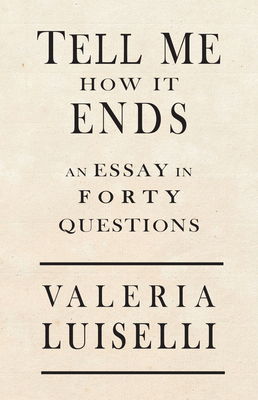
Valeria Luiselli's latest, Tell Me How It Ends is a book that turns numbers back into people. Tell Me How It Ends is an essay using the questionnaire undocumented immigrant children must answer when seeking one of the more permanent residency options in the United States.

From starting his campaign with a racist tirade, through his attempted Muslim bans, his silence on hate crimes committed against American Jews, Muslims, and people brown enough to look like Muslims, and his horrific “unshackling” of ICE, Trump has politically survived entirely on two fundamental principles; fear of otherness and (and I think I'm being very generous here by breaking this into a separate principle) Republican indifference to the consequences of that fear. To put this another way; there is absolutely no data that makes mass deportation practical, there is no illegal immigration crisis, there is no crime wave coming from Latin America. The only reason to tear families apart, turn communities upside down, and greatly destabilize or even endanger whole industries, including our food production and distribution industry, is abstract fear.

And we know it is abstract fear of otherness, because we have seen instances when person-to-person connection breaks through that abstraction and turns “Muslim” into “my neighbors” and a conservative community questions the new anti-immigrant push when a pillar of their community is arrested for potential deportation. (Just a bitter side note here about how frequently “conservatives” adopt more liberal viewpoints about shit that affects them. Anyway...) So let's use Luiselli's book, the story of Manu, her students who became activists, and the other children to de-abstract the South American refugee crisis. Let's use Luiselli's substance to turn numbers back into people.

Think about the pressure on your brain, the whisker of anxiety that brushes across your chin by fundamental questions posed by the best books: why are we here, what does it mean to be safe, who is your family, what dangers face you...Then, imagine your life depended on those answers. Then imagine you had to answer them when you were ten years old.

Picture a child in your life smiling at a balloon they've been given. That smile is about to be shipped back to Honduras like a defective product.

Imagine you were willing to ride on top of a train for hundreds of miles, a train known as La Bestia because so many people were hurt or killed while riding it, for something and then someone threatened to take it all away.

Explain to your child why their best friend's father was taken away.

Would your child survive in the desert with a coyote?

What if you had to put a piece of paper in your child's pocket to maybe save their life? And not even just maybe save their life. What if it was a police report on the shooting and killing of their best friend? What if they were so afraid they could not attend their best friend's funeral? What if they escaped the gang that threatened them, made it to safety, and their life hung by the thread of that piece of paper that had been in their pocket for thousands of miles.

Luiselli is writing about your child, your niece, your child's best friend.

Finally, why the fuck does Luiselli and all the other advocates have to do work to get you to empathize with fucking children?

Every immigration statistic is a reduction of people. And not just any people but quite often children, minors, people who have (for good reason) limited legal responsibility for their actions. Not just any people and children either; but people who risked their lives and endured hardships no native-born American would likely tolerate, all so they could work twice as hard for half as much money as native-born Americans would make because, whether it's delusional, relative, or true, they believe in the promise of opportunity America makes to the world. One fact becomes abundantly clear from Luiselli's book: whenever we go after immigrants (whether they followed all of the procedures or not) we attack people who are both utterly vulnerable and have demonstrated remarkable courage. In many ways, in most ways, in damn near every single way, the refugees fleeing violence in Central and South America for the safety and economic opportunity are exactly like the pioneers we valorize in our mythology as having built this nation.

It matters what we call people, even beyond the legal ramifications of calling the people fleeing the crime and violence engendered in large part by U.S policies, “refugees” instead of “immigrants.” I wonder what the state of our debate would be if Republicans, conservatives, and other immigration hardliners had to refer to the people they wish to deport back to the dangerous lives they fled, as “children.” This is, of course, another aspect of how reading is resistance. Sometimes in the direct ways here and sometimes in more subtle ways, books affect the language we use, they affect our lexicon, our diction, our word associations and thus, how we talk about and to each other.

Of course, there are problems here, too. The children who do get more permanent residency still have to contend with gangs and drugs and other forms of violence. They still have to navigate our education system and our employment system and, if they don't do well enough in those systems, potentially our criminal justice system, all three of which infected with systemic racism that disadvantages them. And, now, they have to do it in a country whose racists have been emboldened by an incompetent man getting three million fewer votes than his opponent. They have to survive in a country that constantly, relentlessly brags about its wealth and power while being the only nation in its economic class that doesn't provide universal healthcare and paid parental leave and has an essentially meaningless minimum wage and many of them will have to do it without having access to the thin shroud we call a social safety net.

Perhaps, our goal shouldn't be sifting through children to decide which of them deserves to stay. Perhaps we shouldn't be spending our time and money arresting and deporting people who just want to work hard for their families. Perhaps we shouldn't turn our backs on the consequences of three or four decades of meddling in the governments of Central and South America.

Instead, perhaps we should strive to become the place all these children were imagining while they road La Bestia.

Wednesday, April 5, 2017

Short Story Collection Round-Up

Once again, I find myself with a stack of great books and not enough time to support all of them as much as they deserve. On the one hand, this is always a good problem to have; despite everything like [insert today's daily fucking disaster], the world is producing and publishing a ton of great literature. I'd always rather be pulling my hair out trying to find a way to write about all the books that deserve attention than scratching my head trying to come up with content. But on the other hand, I'm surrounded by books that deserve support (feel free to read this as “writers who deserve money,”) and I know there just isn't the media space for it.

Perhaps with the resurgence of indie bookstores, newspapers and other media outlets will also begin realizing that the coverage of books does more for their communities than helping book clubs make their next selection. Book coverage provides space for a broader exchange of ideas, a starting point for wider conversations about important issues, and an avenue for providing in depth information and context for events, ideas, and controversies. Perhaps the success of online book coverage and podcasts along with the return of independent bookstores will motivate local media to return to book coverage and writers will no longer have to sacrifice adorable woodland creatures in the hopes of inducing a mention on NPR. Perhaps the state of political discourse in this country and the obvious catastrophic consequences of that discourse, will awaken managing editors to how important book-type thinking is to making smart political decisions and show them they have a responsibility to bring books and book-type thinking to their communities.

But, until then, I'll do what little I can, including these round ups. One important note: I haven't read every story in the collections mentioned below, but I was excited by what I did read. If you're a fan of short fiction, you'll find a lot to be excited about in this list. (Though, if you're a fan of short fiction you might already have heard of these.) If you're not, I'm sure there will be a book in here you might want to try.

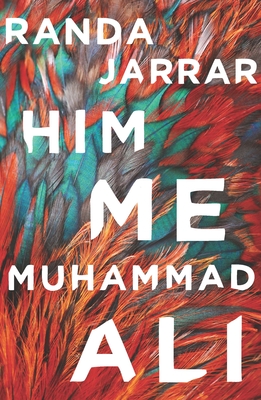
Him, Me, Muhammad Ali by Randa Jarrar
This is one of the books that I was reading and enjoying when the election shattered my reading brain for, oh, let's say a quarter. For a few years, I kept reading short stories in lit mags and anthologies that seemed to cram moments of magical realism into their narrative because...I don't know, maybe there was a trend I missed or maybe the authors hadn't figured out a better way to imply the magic inherent in daily life when viewed through the lens of literature, or maybe they were just sick of all the wannabe Carvers cluttering their workshops with long, hard talks, over rapidly diminishing whiskey bottles.

But Jarrar's magical realism is successful, feeling natural in the moment that you're reading, while also revealing the fundamental strangeness of existence. And it's good enough to be the conference read for Grub Street's Muse and the Marketplace.

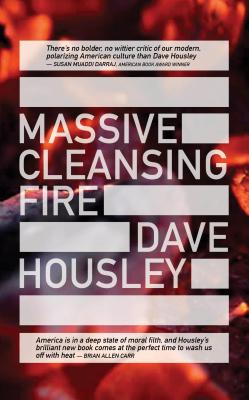
Massive Cleansing Fire by Dave Housley
Dave Housley's collection is like a cross between Cormac McCarthy and Lydia Davis. (Yes, that is a sentence you just read.) Mixing the flash fiction form and occasional analytical narrative distance of Davis, with the scorched-earth lyricism of McCarthy, while using the narrative frame of always encroaching flames, Housley's stories create a new and piercing perspective on our current slow-motion apocalypse. I mean, one of the longer stories is called “Seven Clowns Before the Explosion,” for fuck's sake. That alone is worth the price of admission.

The collection also has an interesting structure, as Housley circles around and re-approaches ideas, images, and situations. “The Fires” series examines the last moments before a mysterious and relentless fire consumes the situation. “Those People” and “You People” examine a black man on a celebrity cruise featuring a Paula Deen style character, complete with public racist remarks, and “The Combat Photographer” series looks at a combat photographer adjusting and not adjusting to life without the constant approach of fire. Too often, the phrase “linked stories,” is marketing speak using either tenuous connections or repeated characters to grasp at novel-level sales, but Massive Cleansing Fire does it the right way, using the variety inherent in a collection of short-stories to explore topics in a way the singular perspective of a novel really can't.

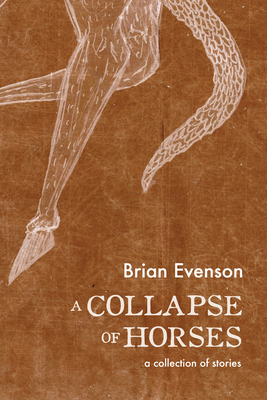
A Collapse of Horses by Brian Evenson
I've been circling Evenson's short fiction for awhile now after reading his dark, cynical, depressing, can't-tear-your-eyes-away sci-fi novel Immobility (I also recently read and really enjoyed his novella on “identity in a poisoned world where the remaining 'people' (if they can be called that) exist as identities in single brain” sci fi novel The Warren). And they're published by Coffee House, so you know they're going to be good. As someone who has dabbled in, but never executed, pulpy genre writing, I'm intrigued by someone who can move between such different styles of thinking.

You can tell they're written by the same brain however, as the stories in A Collapse of Horses have a similar darkness and cynicism, just without the narrative shield of a radiation poisoned planet. In the short stories, you have to confront the grimness head on. But, there is a kind of beauty to this darkness, something in the marks left on the world by the struggle of life that transfixes the eye. Evenson's stories are like those black and white pictures of the elderly who wear the contours of their lives in the wrinkles on their faces or like aerial photographs of abandoned quarries.

(Oh, I once tweeted that I would love to write a video-game with Evenson. I stand by that wild flight of fancy.)

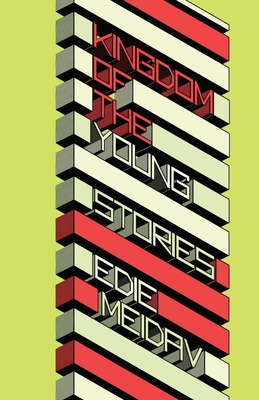
Kingdom of the Young by Edi Meidav
The first couple of stories in Meidav's collection immediately reminded me of Donald Barthelme. There are lots of different ways to be weird, and I've always believed that freedom for weirdness can be most easily explored in short fiction where you aren't required to sustain your weirdness for the length of the novel. In short stories (and poetry but in a different way, and also essays, but in an even more different way) you can present something that is both complete and just a dabble into some weird idea you had.

The same probably also goes for the emotion of “unsettling.” There aren't that many novels that explore that slightly off-kilter emotion of being “unsettled,” and those that do, tend use it as a precursor or component of fear rather than as a complete emotion in itself. Meidav's short stories are the best kind of weird and unsettling.

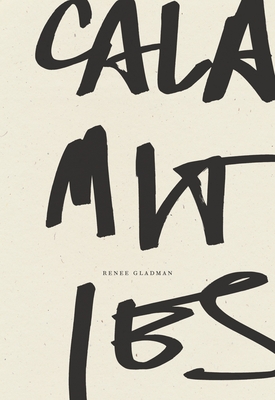
Calamities by Renee Gladman
I'm still not sure I've figured out what Calamities is a collection of, or even, if it's a collection at all. Each little “prose object” could be a self-contained short story or a chapter in a novel. Or a chapter in a book-length essay. Or all three. Or something else I haven't imagined. But whatever they are they're brilliant and I've been wanting to tell you all about it.

Each of the untitled sections begins with the line “I began the day,” and goes, well, somewhere. Sometimes through a relatively banal almost “Dear Diary,” series of events, sometimes through critical, narrative, or creative considerations, and sometimes to places that don't fit into any neat categorization. But that's why I love Gladman's work. We naturally categorize things and there are good and bad results at that tendency to sift, organize, and label. On top of all the self-contained ideas and images, Calamities forces us to examine that drive.

Prose-poem-essays? Grammar-tized thought-chunks? Or maybe I'll just stick with “prose objects.”